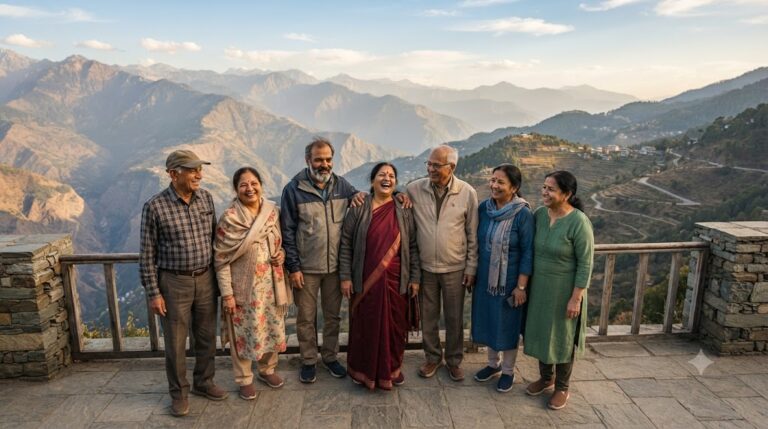
Ask five different travellers what makes a great Bali trip and you’ll get five different answers — because Bali isn’t one destination, it’s four or five very different ones squeezed onto a single island. Jungle mornings in Ubud feel nothing like beach-club sunsets in Seminyak, and both feel nothing like the cliff-edge drama of Uluwatu. Most Bali disappointments we hear about at our Mohali desk trace back to one mistake: picking one hotel and trying to see everything from it. This guide plans your Bali tour package from India the way it should be planned — zone by zone — so you actually get the version of Bali you came for. At Flywings Tour & Packages Pvt Ltd, we’ve been building these itineraries since 2013, and this is the exact framework our desk uses with every Bali client.
Quick facts before you plan: Bali is visa-on-arrival for Indian passport holders, valid up to 30 days. Flight time from India runs roughly 8–9 hours via Delhi or Kuala Lumpur, with no direct India–Bali route. The best months are April–October (dry season); November–March is Bali’s monsoon. Most first-time trips run 6–7 days across two or three zones.
Why Zones, Not Days, Should Drive Your Bali Plan
Bali’s traffic is famously slow, and its best areas are genuinely different in character — so hopping back and forth between Ubud and Seminyak every day wastes hours you’d rather spend at a rice terrace or a beach club. The smarter approach, and the one every good Bali itinerary uses, is to base yourself in each zone for two to three nights and let the sightseeing radiate outward from wherever you’re staying. Below is every zone worth knowing, what it’s actually like, and who it suits.
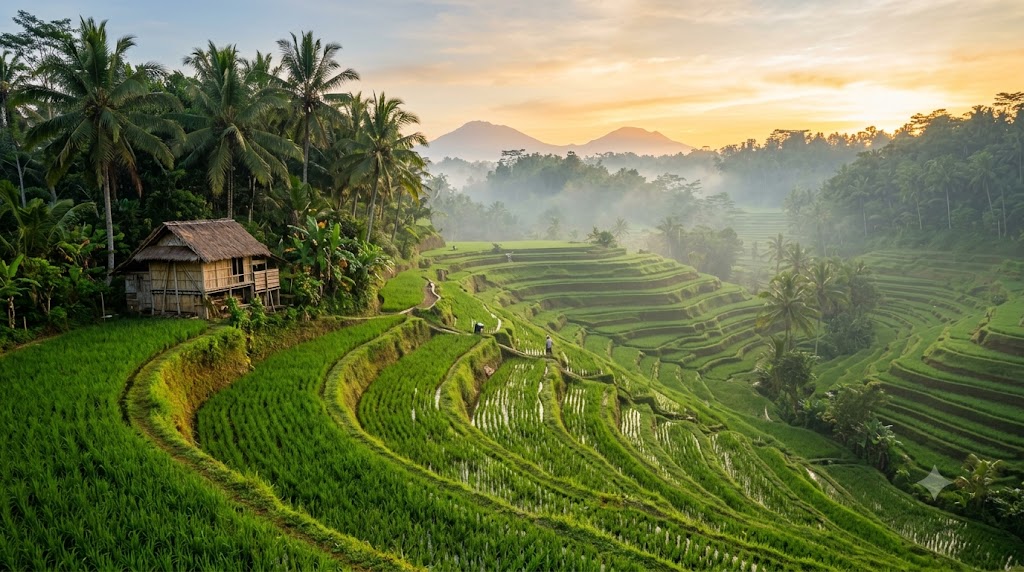
Zone 1: Ubud — Jungle, Rice Terraces and Slow Mornings
Ubud is Bali’s cultural and spiritual heart, set inland among rice terraces and dense jungle rather than on the coast. It’s the Bali of private pool villas with a jungle view, sunrise yoga, and mornings that start slow.
- Tegalalang Rice Terraces: the postcard shot of Bali — layered emerald paddy fields best visited early morning before tour groups arrive.
- Sacred Monkey Forest Sanctuary: a jungle temple complex home to hundreds of long-tailed macaques — genuinely fun, but keep sunglasses and loose items secured.
- Tirta Empul Temple: a working Hindu water temple where locals and visitors alike take part in a purification ritual under the spring-fed pools.
- Campuhan Ridge Walk: an easy, scenic morning walk along a grassy ridge — a favourite for travellers wanting nature without a big excursion.
- Ubud’s café and wellness scene: the origin of Bali’s “healthy café” reputation — smoothie bowls, yoga studios, and spas built into jungle settings.
Stay here if: you want the classic private-pool-villa Bali experience, are travelling for a honeymoon or a wellness-focused trip, or simply want two slow, green days before the coast.
Zone 2: Seminyak — Beach Clubs, Shopping and Sunset Culture
Seminyak is Bali’s polished beach-and-lifestyle zone — wide sandy beaches, sophisticated beach clubs, boutique shopping, and some of the island’s best restaurants, all built around the ritual of watching the sunset with a drink in hand.
- Beach clubs: daybeds, infinity pools facing the ocean, and a full day’s entertainment built around sunset — the quintessential Seminyak afternoon.
- Seminyak Beach itself: wide, walkable, and lined with warungs (local eateries) serving fresh seafood as the sun goes down.
- Boutique shopping on Jalan Kayu Aya (Eat Street): Balinese design boutiques, jewellery and homeware alongside excellent cafés.
- Fine dining: Seminyak punches well above its weight for restaurants, from beachfront fine dining to hidden speakeasy-style bars.
Stay here if: you want a more polished, resort-and-restaurant Bali, are travelling as a couple or with friends, or want easy beach access without Uluwatu’s dramatic (and less swimmable) cliffs.
Zone 3: Uluwatu — Clifftop Drama and Surf Culture
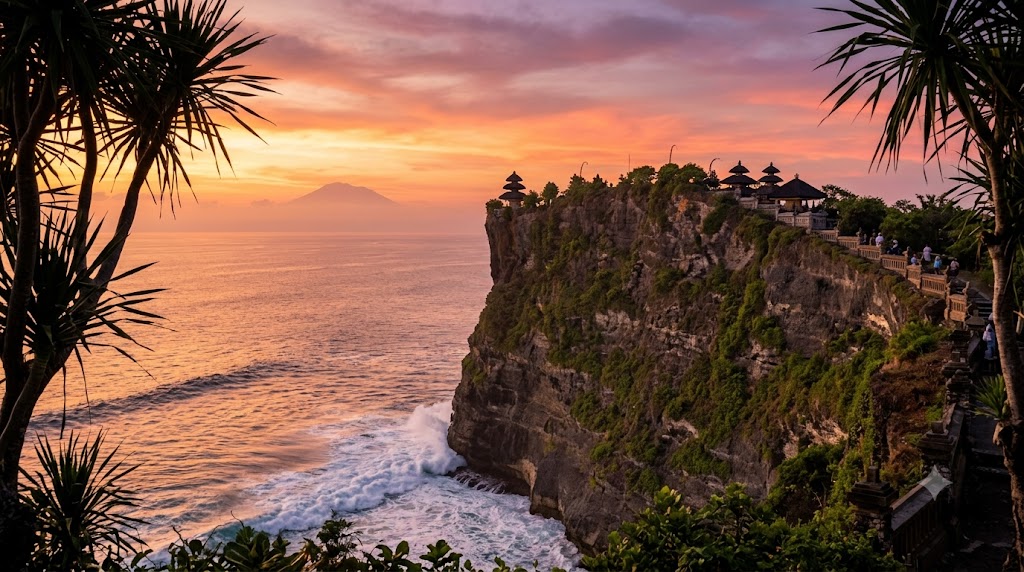
Uluwatu occupies Bali’s southern peninsula, where the island’s coastline turns into sheer limestone cliffs dropping straight into the Indian Ocean. It’s the most visually dramatic part of Bali, and increasingly one of its most fashionable.
- Uluwatu Temple: perched directly on a cliff edge, with a sunset Kecak fire dance performance that’s become a Bali must-do.
- Clifftop beach clubs: Uluwatu’s newer beach clubs are built directly into the cliffside, with infinity pools that appear to merge with the ocean below.
- Surf beaches: Padang Padang, Bingin and Uluwatu itself are among Southeast Asia’s best-known surf breaks, with beginner lessons widely available.
- Hidden coves: a short walk or scooter ride finds small, dramatic beaches accessible only by narrow cliff staircases.
Stay here if: you want dramatic scenery and a slightly more youthful, surf-and-café energy, don’t mind cliffside stairs to reach the beach, or are combining Bali with a honeymoon that wants a “wow” sunset moment.
Zone 4 (Day Trip): Nusa Penida and the Nusa Islands
Technically separate islands a fast boat ride from Bali’s mainland, the Nusa islands have become one of the most-photographed day trips in Southeast Asia — Kelingking Beach’s dinosaur-shaped cliff, Angel’s Billabong’s natural infinity pool, and Crystal Bay’s snorkelling are all here. A full-day organised trip (boat plus a private driver on the island, since roads are rough) is the standard way to see it — we build this in as a day trip from Uluwatu or Seminyak rather than an overnight stay, since accommodation on Nusa Penida itself is far more basic.
Bonus Zone: Canggu — Bali’s Newest Cool
If you have an extra couple of days, Canggu has emerged as Bali’s digital-nomad, surf-and-café district — black sand beaches, a dense cluster of excellent coffee shops and co-working cafés, and a slightly more local, less polished feel than Seminyak. It’s an easy add-on for younger groups or a “one more day” extension rather than a primary base for a first trip.
Bali Culture and Etiquette: What Travellers Should Know
Bali is a Hindu-majority island within Muslim-majority Indonesia, with its own distinct religious and cultural practices that shape daily life more visibly than in most tourist destinations:
- Small offerings (canang sari): you’ll see tiny woven-leaf baskets of flowers and rice placed on pavements, doorsteps and shrines every morning — step around them, never on them.
- Temple dress code: shoulders and knees covered, and a sarong plus sash (often provided at the entrance) tied around the waist is required at most temples, regardless of gender.
- Ceremony days (Nyepi and others): Bali’s Day of Silence, Nyepi, shuts the entire island down for 24 hours — no flights, no lights, no leaving your hotel. If your dates land near it, we flag this well in advance since it affects the whole itinerary.
- Left hand and head etiquette: as across much of Asia, avoid using your left hand for giving/receiving, and avoid touching anyone’s head, including children’s.
- Bargaining: expected and normal at markets, not at fixed-price shops, cafés or beach clubs.
Photo Spots Worth Building Your Schedule Around
If a great photograph matters to your trip, timing beats luck — these are the shots worth planning around rather than hoping to catch:
- Tegalalang rice terraces (Ubud): arrive at opening time, before 8 AM, for empty frames and soft light — by mid-morning, tour buses fill every angle.
- Uluwatu Temple at sunset: arrive at least an hour before sunset to walk the clifftop path in daylight, then stay for the Kecak dance as the sky turns orange.
- Kelingking Beach, Nusa Penida: the famous “dinosaur” cliff viewpoint is busiest late morning with day-trippers — an early boat departure buys a quieter window.
- Handara Gate: the iconic split archway near Bedugul, best photographed early morning before crowds and with soft mountain light.
- Tirta Empul’s purification pools: a genuinely moving photo opportunity if you participate respectfully, best in early morning light before it gets crowded and hot.
Sequencing Your Zones: A Sample 7-Day Itinerary
| Days | Zone | Focus |
|---|---|---|
| 1 | Arrival, transfer to Ubud | Settle in, evening at leisure |
| 2–3 | Ubud | Rice terraces, Monkey Forest, temples, spa/wellness time |
| 4–5 | Seminyak or Uluwatu | Beach clubs, sunset dining, shopping |
| 6 | Nusa Penida day trip | Boat excursion from your coastal base |
| 7 | Departure | Last-minute shopping, airport transfer |
Couples on a honeymoon often swap Day 6 for a private villa day instead of the Nusa Penida trip, which involves a fair amount of travel time. Families with younger kids sometimes drop Uluwatu’s cliff stairs in favour of more Seminyak beach time. We adjust this template to your group every time.
Visa on Arrival: What Indian Travellers Need to Know
Bali (Indonesia) offers Indian passport holders a straightforward Visa on Arrival, valid for stays of up to 30 days, obtainable at the airport on landing. Alongside this, Indonesia collects a separate international tourist levy from all foreign visitors, introduced to help manage the island’s tourism impact — this is a small, fixed charge, distinct from the visa fee itself, and is usually easiest to pay online in advance to skip the airport queue. Documents to carry regardless: passport valid 6+ months from travel date, a return or onward ticket, and proof of accommodation. We handle the online tourist-levy payment and brief every client on the current visa-on-arrival process as part of every Bali booking.
Best Time to Visit Bali from India
| Months | Conditions | Verdict |
|---|---|---|
| April – June | Dry season begins, lush and green, fewer crowds than peak | One of the best windows — great weather, easier bookings |
| July – August | Peak dry season, busiest and priciest | Best weather, but book well ahead — villas and flights sell out |
| September – October | Dry, shoulder season | Excellent value with dry-season weather still holding |
| November – March | Wet season — short, heavy afternoon showers, humid | Cheaper and quieter; mornings are often still clear, so trips work with flexibility |
Getting to Bali from Chandigarh, Amritsar or Delhi
There is no direct flight from India to Bali, so every trip routes through a connecting hub — most commonly Delhi to Denpasar via Singapore or Kuala Lumpur, or via Jakarta with a domestic carrier. For Chandigarh and Amritsar travellers, that means an internal connection to Delhi first; our ticketing desk prices the full multi-leg journey together and books the routing with the shortest total travel time and best fare for your dates, following the same booking-window logic covered in our cheap flights guide — 6–8 weeks out is typically the sweet spot for this longer international routing.
What to Pack for Bali
- Light, breathable clothing — Bali is tropical and humid year-round; cottons and linens work best.
- A light rain jacket or umbrella — even dry season sees the odd afternoon shower.
- Modest cover-up clothing for temple visits — sarongs are often provided or rentable at temple entrances, but carrying your own is easier.
- Reef-safe sunscreen — Bali’s beaches and reefs benefit from it, and some properties now require it.
- A universal power adapter — Indonesia uses European-style two-pin sockets.
- Cash in small denominations for warungs and local markets, alongside cards for hotels and restaurants.
Money-Saving Tips from Our Desk
- Book the flight-heavy routing early. Since there’s no direct India–Bali flight, the connecting-flight fare is the single biggest cost lever — 6–8 weeks out matters even more here than on shorter routes.
- Mix warungs with special-occasion dining. Local warungs serve excellent food at a fraction of beach-club restaurant prices — save the splurges for one or two standout evenings.
- Travel in the shoulder months (April–June or September–October) for dry-season weather at softer rates than the July–August peak.
- Book beach club access, not just entry. Many clubs waive the entry fee against a minimum spend — worth checking before you pay a separate cover charge.
- Use a private driver for full days, not per-trip taxis — a day-rate driver for temple-hopping or the Nusa Penida trip usually costs less than stacking individual rides.
What’s Genuinely Worth the Splurge
Not every upgrade in Bali is worth it — but a few consistently are, based on years of client feedback:
- One night in a private-pool villa, even if the rest of your stay is a standard hotel room — it’s the single most-photographed, most-remembered upgrade travellers mention afterward.
- A sunset dinner reservation at a clifftop restaurant in Uluwatu, booked ahead rather than walked into — the good tables sell out on weekends.
- A private driver for the day over stacking individual rides — the time saved and flexibility gained is worth far more than the cost difference.
- Skip-the-queue or early-entry options at Tegalalang and Nusa Penida’s viewpoints, where crowds genuinely change the experience.
Where we’d tell you to save instead: mid-range warungs are excellent across Bali, and a “5-star” label on a hotel matters less here than location within your chosen zone.
Common Bali Myths We Correct Every Week
| What People Assume | The Reality |
|---|---|
| “Bali is one compact area you can see from one hotel.” | Bali’s zones are genuinely spread out with slow traffic between them — basing in two or three zones works far better than one. |
| “You need a visa arranged before you fly.” | Indian passport holders get visa on arrival — no embassy visit needed, though the separate tourist levy is best paid online in advance. |
| “Nusa Penida is an easy add-on to any day.” | It’s a boat ride away with rough island roads — genuinely needs a full day, not a half-day stop. |
| “Rainy season means the trip is ruined.” | Bali’s wet season brings short, heavy afternoon showers, not all-day rain — mornings are often clear, and rates drop meaningfully. |
Who Bali Is Perfect For
- Honeymooners: Ubud’s private pool villas plus Uluwatu’s clifftop sunsets make one of the most romantic combinations in Southeast Asia — see how it compares in our Bali vs Maldives vs Dubai guide.
- Friends’ groups: Canggu and Seminyak’s beach-club-and-nightlife scene, plus Uluwatu’s surf culture, suit an active group trip well.
- Families: Seminyak’s calmer beaches and Ubud’s cultural sites (with easier terrain than Uluwatu’s cliff stairs) make a comfortable base for kids.
- Wellness travellers: Ubud alone can anchor an entire trip — yoga, spas, healthy cafés and jungle quiet.
Booking a Package vs Planning Bali Yourself
| DIY | Flywings Bali Package | |
|---|---|---|
| Multi-city routing | You piece together the connecting flights yourself | One booking, priced for the shortest total journey and best fare |
| Zone sequencing | Trial and error on where to stay and for how long | Built around your priorities from more than a decade of Bali bookings |
| Villa/hotel quality | Photos vs reality gamble | Properties we’ve vetted through client feedback and our own stays |
| Nusa Penida logistics | Booking boats and island transport separately | Arranged as one seamless day trip |
| Tourist levy & visa | You navigate the process solo | Pre-payment and process handled for you |
Frequently Asked Questions
How many days are needed for a Bali trip from India?
6–7 days is the sweet spot for a first trip — enough to cover two or three zones without rushing. Given the long connecting-flight journey, we don’t recommend less than 5 days, since travel time alone eats into a short trip disproportionately.
Do Indians need a visa for Bali?
Yes, but it’s straightforward — a Visa on Arrival is issued at the airport for stays up to 30 days. Alongside it, Indonesia’s separate international tourist levy applies to all foreign visitors and is best paid online before you fly to avoid an airport queue.
Ubud, Seminyak or Uluwatu — where should I stay?
If you can only pick one, Ubud suits culture-and-wellness travellers, Seminyak suits those wanting polished beach-club Bali, and Uluwatu suits couples and groups chasing dramatic clifftop scenery. Most trips of 6+ days should combine at least two of the three rather than picking only one.
What is the best time to visit Bali from India?
April–October is Bali’s dry season and the most reliable window for weather. July–August is peak season with the best conditions but highest prices; April–June and September–October offer similar dry-season weather at better value.
Is there a direct flight from India to Bali?
No — every route connects through a hub, most commonly Delhi via Singapore or Kuala Lumpur. Total journey time runs roughly 8–9 hours of flying, and our desk books the routing with the shortest layover and best combined fare.
Is Bali good for a family trip, or mainly for couples?
Both — Bali’s reputation as a honeymoon destination sometimes overshadows how well it works for families too, particularly basing in Seminyak with its calmer beaches and easy access to kid-friendly attractions, combined with a couple of cultural days in Ubud.
Can Flywings arrange the Nusa Penida day trip as part of the package?
Yes — boat transfers and a private driver for the island’s rough roads are arranged as one seamless day trip within your Bali package, timed from whichever coastal zone you’re based in.
Is Bali expensive compared to Thailand or Vietnam?
Bali sits roughly in the middle of Southeast Asia’s price range — costlier than budget circuits in Vietnam, broadly comparable to Thailand, and noticeably cheaper than the Maldives for a similar length of stay, especially once you factor in Bali’s wide range of accommodation styles from simple guesthouses to private-pool villas.
What should I know about Bali’s culture before I go?
Bali is a Hindu-majority island with visible daily religious practice — small offerings on pavements, temple dress codes requiring a sarong, and occasional ceremony days that can affect travel plans (Nyepi, the Day of Silence, shuts the island down entirely for 24 hours). None of this needs advance study; a little awareness and respect goes a long way, and we brief every client before departure.
Can I combine Bali with Singapore or another Southeast Asia stop?
Yes — Bali pairs naturally with Singapore or Kuala Lumpur since your connecting flight already routes through one of them; adding 2–3 days at the stopover city is a popular way to see two destinations without a separate booking. Ask us to price a combined Bali + Singapore itinerary alongside our Singapore Escape package.
Plan Your Zone-by-Zone Bali Trip
The difference between an average Bali trip and a great one usually comes down to exactly what this guide covers — the right zones, in the right order, for the right number of nights. Tell us your travel dates and what you want from the trip, and we’ll build the itinerary around it. Explore our Bali Romance 6N/7D package, browse more international tour packages from Chandigarh, or reach us directly:
- Call / WhatsApp: +91 99143 10333 · Landline: 0172-4736185
- Email: sales@flywingstour.co.in
- Visit us: SCF 29, First Floor, Phase 7, Mohali (Chandigarh Tricity) — get directions
Written by Sukhjinder Kaur, Senior Travel Content Writer at Flywings Tour & Packages Pvt Ltd — booking flights and holidays from Mohali, Punjab since 2013. Visa processes and seasonal guidance verified as of July 2026; entry rules and levies can change, so confirm current details when you enquire.
Sukhjinder Kaur is a premium travel content writer specialising in the tourism industry. She writes Flywings' destination guides, fare-saving playbooks and visa explainers — every piece researched with the agency's ticketing and visa desks before it is published.
View full profile