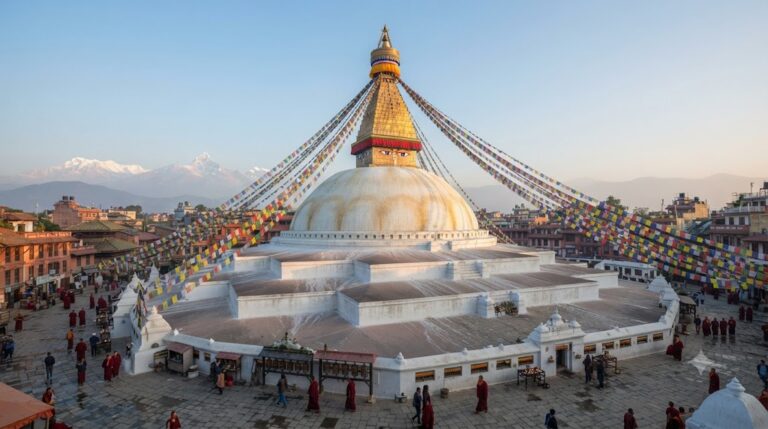
Here is a fact almost nobody planning an Oman trip out of Punjab seems to know: you do not need to route through Delhi. Air India Express flies directly from Amritsar to Muscat, and that single detail changes the entire calculation for anyone in the Tricity weighing a short-haul Gulf trip. Indian arrivals into Oman jumped 26 percent in the first half of 2026 alone, and Muscat-specific searches from India are up over 200 percent, yet every generic “Oman package from Chandigarh” page we have checked routes you through Delhi or Mumbai without mentioning the option sitting right next door in Amritsar. This guide starts with that flight, then walks through what makes Oman worth the trip once you land. We have checked a dozen of the top-ranking “Oman package from Chandigarh” and “Oman package from Amritsar” results while researching this piece, and not one mentions the direct Amritsar route specifically, they all default to a Delhi-first itinerary structure regardless of where the traveller is actually starting from. That gap is exactly what this guide is built to close.
Quick context: Oman fits four genuinely different landscapes, city, mountains, desert, and coast, into a country small enough to cross in a day’s drive. That range in such a short flight from Punjab is the actual selling point, more than any single sight.
The Amritsar Flight, Explained
Air India Express operates direct flights between Amritsar and Muscat, part of the airline’s Gulf network that also serves Delhi, Kochi, Kozhikode, and Thiruvananthapuram from Muscat. For a Chandigarh-based traveller, this means skipping the domestic connection entirely, a short drive to Amritsar’s Sri Guru Ram Dass Jee International Airport rather than a flight-plus-layover routing through Delhi, the same routing advantage we cover in more detail in our Chandigarh and Amritsar international flights guide. The flight itself runs roughly three and a half hours, comparable to a Dubai flight time, which makes Oman a genuinely realistic long-weekend option in a way that requires almost no extra planning around connections.
Why the Search Growth Matters Here Specifically
A 211 percent jump in Muscat searches and a 26 percent rise in actual Indian arrivals within six months is not a small trend, it reflects a genuine shift in where short-haul Gulf travellers are looking beyond the usual Dubai default. For a Tricity-based traveller, that shift lines up almost perfectly with a route advantage, the direct Amritsar flight, that has existed quietly without much promotion. Two growing trends meeting one underused flight route is exactly the kind of gap worth acting on before it closes, and it is the reason we are publishing this guide now rather than waiting for Oman to become as commonly discussed as Dubai already is.
The E-Visa: What It Actually Takes
| Detail | What to Know |
|---|---|
| Application | Entirely online through Oman’s official e-visa system, no embassy visit |
| Cost | Roughly OMR 5 for a 10-day tourist visa, or OMR 20 for 30 days |
| Processing time | Typically 24 to 48 hours |
| Documents needed | Passport scan valid at least 6 months, a passport-size photo, return flight booking, confirmed hotel booking, and proof of a bank balance of at least OMR 200 |
| On arrival | Print the approval PDF and present it to immigration at Muscat International Airport, it is not automatically linked to your passport digitally |
Note that Oman largely discontinued visa-on-arrival for most nationalities including India, so this e-visa step is not optional the way it might be for some neighbouring Gulf destinations, apply before you fly, not after you land. Build in a buffer of at least a week before your travel date when applying, since the stated 24-to-48-hour processing window is a typical case rather than a guarantee, and a rejected or incomplete application needs time to be corrected and resubmitted without threatening your travel dates.
Four Landscapes, One Short Trip
This is the detail that makes Oman genuinely stand out against other short-haul Gulf options. Most nearby international destinations from Punjab deliver one dominant experience, a city, a beach, a desert. Oman delivers all four within a country you can reasonably cross by road in a single well-planned week.
City: Muscat, 2 Days
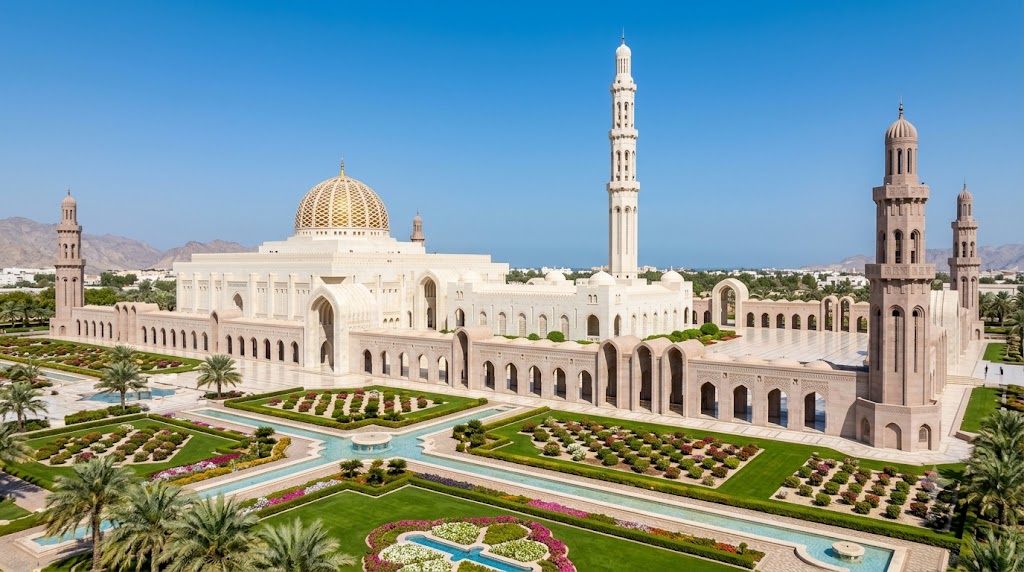
The Sultan Qaboos Grand Mosque, best visited before 11 AM to beat both the heat and the crowds, is the essential stop, alongside the Mutrah Souq for spices, frankincense, and silver, and the Royal Opera House Muscat for a look at the city’s more modern architectural face. Muscat itself is noticeably calmer and less built-up than Dubai, a genuine part of its appeal for travellers who want Gulf convenience without Gulf-city intensity.
Mountains: Nizwa and the Interior, 1 to 2 Days
A drive inland to Nizwa, once Oman’s capital, centres on its imposing fort and a Friday-morning livestock and produce souq that feels genuinely local rather than staged for tourists. The surrounding Al Hajar mountains, including Jebel Shams, Oman’s highest peak and known locally as the Grand Canyon of Arabia for its dramatic gorge views, reward an extra day if your itinerary allows it.
Desert: Wahiba Sands, 1 Night
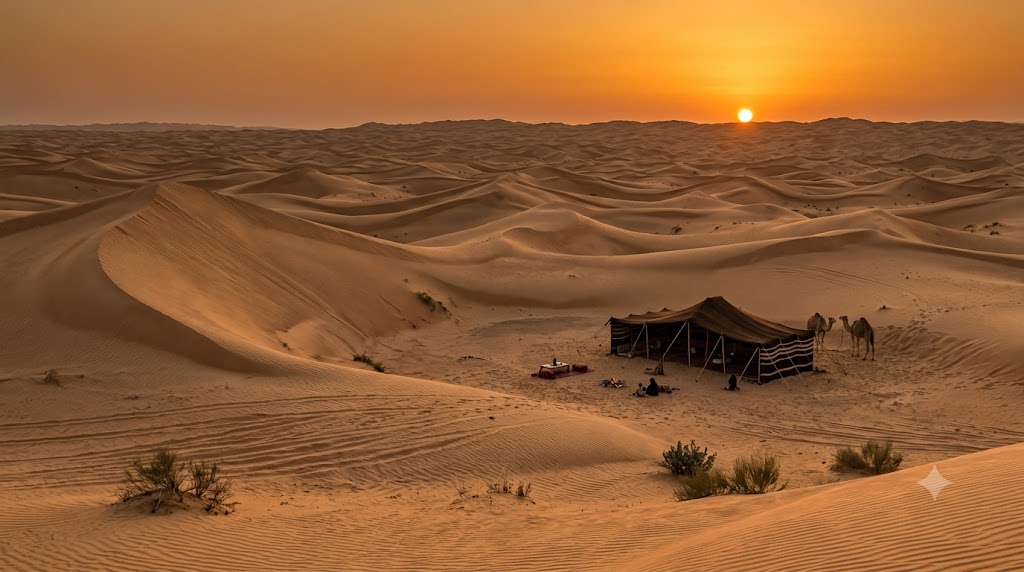
An overnight stay at a Bedouin-style desert camp in the Wahiba Sands is the single experience most first-time visitors rate highest. Dune bashing by 4×4, a camel ride at sunset, and a night sky largely free of light pollution combine into an experience that genuinely does not exist anywhere within a similar flight time from Punjab.
Coast: Muscat’s Beaches or a Salalah Extension
Muscat’s own coastline offers pleasant beaches and dolphin-watching boat trips without needing to travel further, but travellers with extra days sometimes add Salalah in the south, a genuinely different Oman shaped by the annual khareef monsoon season, lush and green in a way that surprises people expecting only desert.
A Sample 6-Day Itinerary
- Day 1: Arrive Muscat, evening at Mutrah Corniche and the souq
- Day 2: Sultan Qaboos Grand Mosque in the morning, Royal Opera House and Old Muscat in the afternoon
- Day 3: Drive to Nizwa, fort and souq visit, onward toward the Wahiba Sands by evening
- Day 4: Overnight desert camp, dune bashing, camel ride, stargazing
- Day 5: Morning desert sunrise, drive back to Muscat via Wadi Bani Khalid for a swim stop at the natural pools
- Day 6: Muscat beach morning or last-minute souq shopping, departure
This pacing covers all four landscapes without feeling rushed, and it fits comfortably within a long weekend plus a couple of extra leave days, well suited to the kind of short-haul trip Amritsar’s direct connection makes realistic in the first place.
Best Time to Visit
| Window | Conditions |
|---|---|
| October to April | The main travel season, warm but manageable daytime temperatures, cooler evenings, ideal for the desert camp and mountain legs |
| May to September | Very hot in Muscat and the interior, often exceeding 40 degrees C, best avoided for the desert and mountain legs specifically |
| June to September (Salalah only) | The khareef monsoon season transforms Salalah into a green, misty landscape, the one part of the country where summer is actually the peak season |
What to Eat
Omani food is less internationally known than its Gulf neighbours’ cuisines, but it is a genuine part of the experience once you know what to look for.
- Shuwa, slow-cooked marinated lamb or goat, traditionally wrapped in banana leaves and cooked in an underground pit for close to a full day, usually reserved for special occasions but available at better restaurants
- Majboos, a spiced rice dish with meat or fish, closely related to biryani in structure and a comfortable, familiar flavour profile for Indian travellers
- Omani halwa, a dense, sticky dessert flavoured with cardamom, rosewater, and saffron, traditionally served alongside Omani coffee as a welcome gesture
- Omani coffee (qahwa), lightly spiced with cardamom, served in small cups and refilled generously, a hospitality ritual worth experiencing rather than rushing through
- Fresh seafood along the coast, including grilled kingfish and prawns, reflecting Oman’s long coastline and fishing tradition
Indian restaurants are also widely available in Muscat given the large resident Indian community, useful for travellers wanting a familiar meal partway through the trip, though it would be a shame to skip Omani food entirely on a first visit.
Oman vs Dubai: The Honest Comparison
Since Dubai is the default comparison almost every Punjab traveller makes, here is how the two actually stack up.
| Factor | Oman | Dubai |
|---|---|---|
| Pace and atmosphere | Calmer, more traditional, less built-up | Fast-paced, modern, shopping and skyline focused |
| Signature experience | Desert camping, mountain drives, natural landscapes | Malls, iconic architecture, desert safaris as a shorter add-on |
| Flight from Punjab | Direct from Amritsar, around 3.5 hours | Via Chandigarh-Delhi or a direct Amritsar-Dubai option, broadly similar flight time |
| Repeat-visit appeal | High for travellers who have already done Dubai and want something different | Very high as a reliable, tested favourite |
| Best fit | Nature, adventure, and a quieter Gulf experience | City energy, shopping, and a wider range of entertainment options |
Our honest read: Oman is not trying to be a Dubai replacement, and most of our clients who book it have already done Dubai once or twice and specifically want the desert-and-mountain experience Dubai’s city-first itinerary does not really offer.
Extending Into the Mountains: Jebel Shams and Jebel Akhdar
For travellers with an extra day or two, Oman’s mountain interior rewards the detour. Jebel Shams, Oman’s highest peak, overlooks a dramatic gorge often compared to a miniature Grand Canyon, with viewpoints and a rim walking trail that require no technical climbing experience. Jebel Akhdar, the Green Mountain, sits at a high enough elevation to support terraced rose and fruit gardens in an otherwise arid country, and its cooler temperatures make it a popular escape during the hotter months when Muscat and the desert legs become less comfortable. Both are reachable by 4×4 from the Nizwa area and work well as an extension rather than a replacement for the core Muscat-Nizwa-Wahiba Sands route.
Wadi Bani Khalid: The Detail Most Itineraries Skip
Between Nizwa and the Wahiba Sands sits Wadi Bani Khalid, a series of natural turquoise pools fed by mountain springs, cool enough for a genuinely refreshing swim after a hot desert drive. Most rushed itineraries skip it entirely in favour of getting to the desert camp faster, but it costs little extra time to build in as a midday stop and consistently surprises first-time visitors who did not expect a natural swimming pool in the middle of an otherwise arid landscape.
Cost Shape, Without Fixed Numbers
We are not publishing fixed price tags, since cost varies by season and hotel category, but the relative shape is worth knowing. Oman generally runs comparable to or slightly above Dubai for hotels of an equivalent standard, but the direct Amritsar flight keeps the airfare component genuinely competitive against routing through a metro hub, and the desert camp night is typically one of the more affordable experiences on the itinerary relative to what it delivers. Reach out and we will build a real, itemised quote for your dates within 24 hours, no obligation.
Culture and Dress Code Notes
Oman is a conservative Muslim country, and while it is genuinely welcoming to tourists, a few practical notes go a long way toward a smoother trip.
- Dress modestly in public, shoulders and knees covered for both men and women, particularly outside beach and resort areas.
- Full coverage is required at the Sultan Qaboos Grand Mosque, including a headscarf for women, loose full-length clothing, and closed shoes; scarves are sometimes available to borrow on site but carrying your own avoids any delay.
- Alcohol is available in licensed hotels and restaurants but not sold in general retail the way it is in Dubai, worth knowing if that is part of your trip planning.
- Public displays of affection are best kept minimal, consistent with broader Gulf cultural norms.
- Fridays follow a different rhythm, since it is the primary day of rest, with some souqs and businesses operating on adjusted hours, the Nizwa livestock souq specifically is a Friday-morning institution worth timing your visit around rather than against.
Packing and Practical Notes
- Omani Rial is the local currency; cards are widely accepted in Muscat but carry cash for the Nizwa souq and desert camp.
- Pack for a genuine temperature swing, hot desert days and noticeably cooler desert nights, particularly if visiting the Wahiba Sands or the Jebel Akhdar mountain extension.
- A dedicated 4×4 with an experienced driver is essential for the Wahiba Sands and Jebel Shams legs, the terrain is not suited to a standard rental car, and most well-run itineraries include this as part of the package rather than leaving it to arrange locally.
- English is widely spoken in Muscat’s tourist areas, including hotels, restaurants, and major attractions, making on-the-ground communication straightforward for most travellers.
Booking Timing
Two timing factors are worth acting on. First, the October-to-April travel window is when demand, and pricing, both climb, so booking a few months ahead for a winter trip specifically pays off more than it would for a shoulder-season booking. Second, awareness of the direct Amritsar-Muscat route is still relatively low even within the Tricity itself, meaning seat availability on this specific flight is currently more forgiving than the equivalent Delhi-Muscat route, though that gap is likely to close as more Punjab-based travellers discover it over the coming year.
Oman for Family and Group Trips
The city-mountain-desert combination genuinely suits mixed-age groups better than most short-haul international options. Muscat itself is easy and comfortable for older travellers, the desert camp typically offers both adventurous dune-bashing and calmer camel-ride options within the same evening, and younger travellers in the group tend to rate the 4×4 desert driving and mountain legs as genuine highlights rather than filler. For larger friend groups, the direct Amritsar flight means the whole group can travel together on one route without needing to coordinate around a Delhi layover, simplifying logistics meaningfully compared to most other international options from this region.
Who This Trip Suits
- First-time Gulf travellers wanting something calmer than Dubai without giving up short flight time or easy visa access
- Adventure-leaning younger travellers, given the growing interest in dune bashing, mountain trekking, and desert camping specifically among younger Indian visitors
- Families wanting a genuinely varied trip in a short window, since the city-mountain-desert combination keeps a mixed-age group engaged without needing multiple flights
- Repeat Dubai visitors looking for a change that still keeps flight time and visa complexity low
Frequently Asked Questions
Is there really a direct flight from Amritsar to Muscat?
Yes, Air India Express operates this route directly, avoiding the need to connect through Delhi or any other hub, a detail most generic Oman package content for this region does not mention.
Do Indians need a visa for Oman?
Yes, a standard e-visa applied for entirely online, with processing typically taking 24 to 48 hours. Oman has largely discontinued visa-on-arrival for Indian passport holders, so this needs to be arranged before travel.
Is Oman safe for Indian tourists, including families and solo travellers?
Yes, Oman is widely regarded as one of the safest countries in the Gulf region, with a stable, low-crime environment that suits families, solo travellers, and first-time Gulf visitors alike.
How many days does an Oman trip need?
Five to six days comfortably covers Muscat, Nizwa, and an overnight in the Wahiba Sands, the core experience most first-time visitors are after. Add extra days for a Jebel Shams mountain extension or a Salalah add-on if your schedule allows.
What is the best single experience in Oman for a first visit?
The overnight Wahiba Sands desert camp consistently rates as the highlight for first-time visitors, combining a 4×4 dune-bashing experience, a Bedouin-style camp, and genuinely dark night skies within a single, well-organised overnight stop.
Is Oman good for a honeymoon?
Yes, particularly the desert camp night and a Salalah extension if travel dates allow, both of which offer a quieter, more intimate experience than a typical city-and-beach Gulf itinerary.
Can I rent a car and drive myself in Oman?
Self-driving is possible on Muscat’s main roads and the highway to Nizwa, but the Wahiba Sands and Jebel Shams legs require genuine off-road capability and local route knowledge, which is why most well-planned itineraries use a dedicated 4×4 with a driver for those specific stretches rather than a standard rental.
Is alcohol available in Oman?
Yes, but only within licensed hotels, resorts, and certain restaurants, not through general retail. This is a meaningfully more relaxed policy than some neighbouring countries but still more restricted than Dubai, worth factoring in if it matters to your trip plans.
How does the Amritsar route compare to flying via Delhi or Dubai first?
The direct Amritsar-Muscat flight is both faster and simpler than any routing that adds a connection, since it skips the domestic leg to a metro hub entirely. For a Chandigarh or Amritsar-based traveller, this is currently the most efficient way to reach Oman available, and it is the detail most generic package content for this region overlooks completely.
Book the Route That Actually Starts in Punjab
A generic Oman package built around a Delhi departure ignores the one advantage a Tricity traveller already has, a direct flight sitting an hour and a half down the road in Amritsar. Explore more international tour packages from Chandigarh, or call us directly at +91 99143 10333 for an itinerary built around the Amritsar route from the start, whether that is a quick five-day city-and-desert trip or the fuller week with a Jebel Shams mountain extension added in. Flywings team since 2013.
Sukhjinder Kaur is a premium travel content writer specialising in the tourism industry. She writes Flywings' destination guides, fare-saving playbooks and visa explainers — every piece researched with the agency's ticketing and visa desks before it is published.
View full profile