
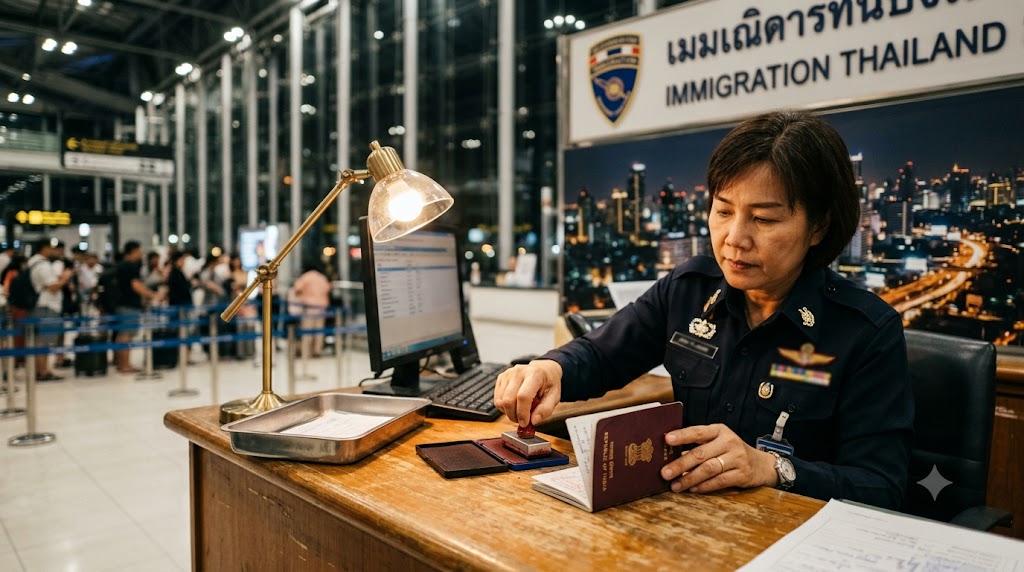
Quick answer: Yes — Thailand is visa-free for Indian passport holders in 2026, for stays of up to 30 days. A May 2026 proposal to scrap visa-free entry entirely caused weeks of panic and a real dip in bookings, but Thailand’s Cabinet reversed course on 14 July 2026 and made the 30-day visa-free arrangement permanent. If you searched this because of the May headlines, you’re reading slightly old news — here’s the full story.
Few visa stories have confused Indian travellers as much as Thailand’s in 2026. In the space of two months, Indians went from a 60-day visa-free arrangement, to headlines announcing it was being scrapped for a 15-day paid visa-on-arrival, to a Cabinet U-turn that landed on a permanent 30-day visa-free entry. At our Mohali desk, Flywings Tour & Packages Pvt Ltd fields dozens of “wait, do I need a Thailand visa now or not?” calls a week — so here is the complete, dated timeline of what happened, exactly what the rules are today, and what it means for your next Bangkok or Phuket trip.
The Timeline: How We Got Here
- Before May 2026: Indian passport holders enjoyed visa-free entry to Thailand for stays of up to 60 days — one of the most generous arrangements Thailand offered any nationality, and a major reason Thailand became a top short-haul destination for Indian travellers.
- 19 May 2026 — the announcement that caused panic: Thailand’s Cabinet approved a restructuring of its immigration framework that would have removed India from the visa-free list entirely, replacing it with a 15-day visa-on-arrival requiring a fee of roughly 2,000 THB (about ₹5,000) paid at the airport.
- Late May – June 2026 — the fallout: The proposal triggered real confusion among Indian travellers — many assumed Thailand had become visa-required overnight — and bookings from one of Thailand’s most important source markets measurably declined in the following weeks.
- 14 July 2026 — the reversal: Facing the drop in Indian arrivals, Thailand’s Cabinet reversed the May decision. Instead of reverting to the old 60-day scheme, it went further: India was added to Thailand’s 30-day visa-free list on a permanent basis — a lasting entry, not a temporary extension.
What the Rules Actually Are Today
This table is the one to bookmark — it settles the “60 days, 15 days, or 30 days?” confusion in one look:
| Before May 2026 | The Scrapped May Proposal | The Rule Today (Since 14 July 2026) | |
|---|---|---|---|
| Visa requirement | Visa-free | Visa-on-arrival required | Visa-free |
| Maximum stay | 60 days | 15 days | 30 days |
| Cost at the border | None | ~2,000 THB (~₹5,000) | None |
| Status | Was in effect | Never actually implemented | Permanent, current rule |
In short: the scary version — a paid 15-day visa-on-arrival — never actually came into force. What did come into force is better than most travellers realise: visa-free entry, permanently, for a full month.
Why Did Thailand Almost Scrap Visa-Free Entry?
The May proposal was framed around tightening Thailand’s broader immigration and tourism-visa framework — addressing concerns about long-stay visitors overstaying tourist terms and, in some cases, working informally while on a tourist entry. India was one of several nationalities caught in a wider policy tightening, not singled out specifically. The reversal in July reflects something Thailand’s tourism economy takes very seriously: Indian travellers are one of its largest and fastest-growing inbound markets, and the dip in bookings after the May announcement made the economic cost of the stricter rule clear within weeks.
Setting the Record Straight: Myths vs Facts
| What People Are Saying | The Actual Fact |
|---|---|
| “Thailand needs a visa for Indians now.” | False. Entry is visa-free for stays up to 30 days, as of the 14 July 2026 ruling. |
| “You have to pay 2,000 THB at the airport.” | False for the current rule. That fee applied only to the May proposal, which was reversed before it took effect. |
| “The old 60-day stay is still available.” | Not currently — the permanent arrangement from July 2026 is 30 days visa-free, not the earlier 60. |
| “This could change again.” | True, and worth planning around — Thailand’s rules for Indian travellers have shifted twice in two months in 2026. Confirm live rules close to your travel date. |
Real Scenarios: Three Calls We’ve Actually Taken
Numbers and rulings are one thing — here’s what the confusion has actually looked like across our counter since May:
- “I already paid for flights in June — do I need to cancel?” A Mohali family had booked a Bangkok trip for August right after the May headlines broke, convinced they’d now need a paid visa-on-arrival they hadn’t budgeted for. They didn’t need to change a thing — by the time they travelled, the July reversal was already in effect and entry was visa-free.
- “My travel agent app still shows the old 60-day rule.” Several clients found outdated visa information on booking apps and blogs that hadn’t been updated since before May. This is exactly why we verify live rules per booking rather than trusting a cached FAQ page — including our own, which we keep current.
- “We’re planning a 45-day trip — is that still possible visa-free?” Not under the current 30-day rule. For this client, we mapped out a simple visa-run to Cambodia at the 28-day mark, resetting a fresh 30-day window for the second half of their trip — a common workaround for travellers used to the old 60-day allowance.
How Thailand’s Rules Compare to Its Neighbours in 2026
Since Thailand’s visa status has been genuinely volatile this year, it’s worth seeing where it stands next to the other Southeast Asian destinations Indian travellers routinely compare it with — all covered in more depth in our visa-free countries guide:
| Destination | Entry Type for Indians (2026) | Typical Stay |
|---|---|---|
| Thailand | Visa-free | 30 days |
| Malaysia | Visa-free | Up to 30 days |
| Indonesia (Bali) | Visa on arrival | ~30 days, extendable |
| Singapore | e-Visa | Per approval, typically 30 days |
| Vietnam | e-Visa | Per approval, typically 30–90 days |
| Cambodia | e-Visa | Per approval, typically 30 days |
Thailand and Malaysia are now the two genuinely visa-free options on this list for Indian passport holders — which is part of why Thailand’s near-miss in May mattered so much to travellers who’d built entire multi-country itineraries around not needing paperwork for it.
Best Time to Visit Thailand Now That the Rules Have Settled
With the visa question resolved, the only planning variable left is weather — and Thailand’s calendar rewards getting this right:
| Months | Conditions | Verdict |
|---|---|---|
| November – February | Cool, dry, 20–32°C | Peak season. The best weather nationwide; book flights and island resorts 6–8 weeks out. |
| March – May | Hot, up to 35–40°C, especially in Bangkok | Good for island beach time; city sightseeing is more comfortable early morning or evening. |
| June – October | Southwest monsoon, humid with regular showers | Lower rates and fewer crowds; the Andaman coast (Phuket, Krabi) sees more rain than the Gulf side. |
What This Means If You’re Planning a Trip
For most travellers booking a standard Thailand holiday — Bangkok’s temples and markets, Phuket or Krabi’s beaches, a Phi Phi Islands day trip — 30 days visa-free is more than enough runway, and nothing practically changes versus what you may have assumed. Where it matters more:
- Longer stays: if you were planning 45 or 60 days (a common pattern for retirees or long workations), you now need to either exit and re-enter to reset the 30-day clock, or look at a formal longer-stay visa category — our desk can walk you through both options.
- Multi-country Southeast Asia trips: a Thailand + Vietnam + Cambodia route, for instance, is easier to sequence now that Thailand’s window is a known, permanent 30 days rather than a moving target.
- Booking confidence: because this was reversed rather than left ambiguous, you can book Thailand flights and hotels without worrying about a surprise visa fee appearing at check-in — but as always, we verify the live rule before you fly, since it has moved twice already this year.
Documents to Carry Regardless of Visa-Free Status
“Visa-free” is not “document-free” — Thai immigration, like most countries, still checks the following on every visa-free entry:
- Passport valid for at least 6 months from your travel date
- A confirmed return or onward flight ticket
- Proof of accommodation for your stay (hotel booking or address)
- Evidence of sufficient funds for the trip, if asked
These are exactly the documents we prepare as a checklist for every Thailand booking — visa-free entry removes the application, not the paperwork discipline.
Where to Go in Thailand: A Quick Route Map
With entry sorted, the actual trip-planning question is which of Thailand’s very different regions to prioritise:
- Bangkok: temples (Wat Arun, Wat Pho, the Grand Palace), floating markets, rooftop bars and some of Asia’s best street food — 2–3 days is the usual anchor for any Thailand itinerary.
- Phuket: Thailand’s biggest beach resort island, with nightlife in Patong and quieter bays further south — the easiest beach add-on for a first Thailand trip.
- Phi Phi Islands: a day-trip staple from Phuket or Krabi — limestone cliffs, Maya Bay, and some of the clearest water in the Andaman Sea.
- Krabi: a calmer alternative to Phuket, with Railay Beach’s dramatic cliffs and easier access to island-hopping.
- Chiang Mai: the north’s cultural capital — temples, night markets, and cooler hill weather, best paired with Bangkok on a longer trip.
Our Thailand tour packages combine two or three of these into a single itinerary, timed to make the most of your visa-free 30 days without feeling rushed.
Who This News Actually Matters Most For
Not every Thailand traveller experienced this the same way. Here’s how the 2026 back-and-forth lands for different kinds of trips:
- First-time short-haul travellers: the least affected group in practice — a standard 5–7 day Bangkok-and-beach trip fits comfortably inside 30 days visa-free, exactly as it always would have. The May scare was mostly noise for this group, but understandably alarming noise.
- Honeymooners and couples: Thailand remains a strong value pick against Bali or the Maldives for a 6–8 day trip — see our Bali vs Maldives vs Dubai comparison for how it stacks up, and ask us to slot Thailand into that same comparison for your dates.
- Families with school-holiday timing: since bookings are often made months ahead for summer or winter breaks, this group is exactly who got caught mid-plan by the May announcement — and exactly who benefits most from a desk that tracks the rule rather than assuming a booking made in April is still accurate in July.
- Long-stay and repeat visitors: the group genuinely affected by the drop from 60 to 30 days. If you previously treated Thailand as a 45–60 day workation base, this is the one real, lasting change worth re-planning around.
- Multi-country backpacker itineraries: Thailand’s new permanent 30-day window is actually easier to plan around than the old uncertainty — pairing it with Vietnam or Cambodia’s e-Visas (see our visa-free countries guide) now has one less moving variable.
Getting There from Chandigarh, Amritsar or Delhi
Thailand doesn’t yet have a direct flight from Chandigarh or Amritsar, so every Thailand trip from Punjab routes through Delhi — the good news is that connection is short and frequent. Bangkok sees multiple daily departures from Delhi across full-service and low-cost carriers, keeping total journey time (including the Chandigarh–Delhi leg) to well under half a day gate to gate. Our ticketing desk prices the Chandigarh–Delhi–Bangkok routing against a Chandigarh–Delhi road transfer plus flight, and books whichever combination gives you the best total fare and the least airport waiting — the same booking-window logic we cover in our cheap flights guide applies here too: booking 4–6 weeks out typically beats a last-week fare by a wide margin.
Five-Minute Pre-Departure Checklist
- Confirm the live visa rule for your exact travel date — call us or check Thailand’s immigration site directly, since 2026 has already shown the rule can move.
- Check your passport validity — 6 months from your travel date, non-negotiable at check-in.
- Have your return ticket ready to show — immigration and airline staff both ask for this on visa-free entries.
- Carry proof of your hotel booking, printed or on your phone with offline access in case of patchy airport Wi-Fi.
- Keep a card or cash buffer accessible in case of a funds check — rare, but worth being ready for.
The Bigger Picture: Why This Story Matters Beyond Thailand
The Thailand episode is a useful reminder for every international trip, not just this one destination: visa rules are policy decisions, and policy decisions can change with very little warning — in either direction. The safest habit for any traveller is the one our desk practises by default: verify the live entry requirement close to your travel date, from a source that’s actually checking in real time, rather than trusting a headline (or a blog post, including this one) as a permanent fact. We update this page and our internal guidance the moment official rules shift again.
How Flywings Handles This for You
Because Thailand’s rule has changed twice within one travel season, we don’t rely on a static checklist for Thailand bookings — our desk confirms the live entry requirement for your exact travel dates before we finalise flights or hotels, and we brief you on exactly what to carry at the airport. If Thailand’s rules move again before your trip, we update your booking guidance directly rather than leaving you to find out at immigration. This is the same live-verification approach we use for every visa question, whether it’s Thailand’s evolving rules or the standard UAE visa process for Dubai.
Frequently Asked Questions
Do Indians need a visa for Thailand in 2026?
No — as of the 14 July 2026 ruling, Indian passport holders can enter Thailand visa-free for stays of up to 30 days. The stricter 15-day paid visa-on-arrival proposed in May 2026 was withdrawn before it ever took effect.
Why did people think Thailand ended visa-free entry for Indians?
Because it briefly, officially planned to. Thailand’s Cabinet approved a shift to a 15-day paid visa-on-arrival on 19 May 2026, which made headlines and caused real confusion. That decision was reversed on 14 July 2026, before it was implemented, in favour of a permanent 30-day visa-free arrangement — better than what almost happened, though shorter than the original 60-day scheme.
How long can Indians stay in Thailand without a visa now?
Up to 30 days per entry, visa-free, under the current permanent rule. This is down from the earlier 60-day visa-free arrangement but well clear of the 15-day paid entry that was proposed and scrapped.
Is the 30-day visa-free rule permanent or could it change again?
Thailand’s Cabinet has framed the July 2026 decision as a permanent arrangement, not a temporary extension. That said, given two policy shifts inside two months earlier this year, we recommend confirming the live rule with our desk shortly before you travel — it costs nothing and takes minutes.
What if I need to stay in Thailand longer than 30 days?
You have two practical options: exit to a neighbouring country and re-enter to start a fresh 30-day visa-free period, or apply for a formal Thai visa category suited to longer stays before you travel. Tell us your planned duration and we’ll advise the cleaner route for your situation.
Does this affect Thailand tour package prices?
Not directly — since the paid visa-on-arrival proposal never took effect, there’s no new visa fee to factor into your Thailand trip cost. As always, we quote every Thailand package individually based on your dates, hotel category and season.
Is there a direct flight from Chandigarh to Thailand?
Not currently — Thailand trips from Punjab route via Delhi, which has frequent daily Bangkok departures. Total journey time stays well under half a day, and our desk books the combined Chandigarh–Delhi–Bangkok routing at the best available fare for your dates.
Where can I check the official, current Thailand visa rule myself?
Thailand’s Ministry of Foreign Affairs and immigration authorities publish official updates, and Indian embassy advisories mirror them. Given how quickly this has changed in 2026, we’d still recommend confirming with a desk that checks live, like ours — a two-minute call beats relying on a search result that may already be outdated by the time you read it.
Book Thailand With Confidence — We Track the Rules So You Don’t Have To
Thailand remains one of the best-value, best-connected short-haul holidays for Indian travellers — the 2026 visa back-and-forth doesn’t change that, it just means the rules are worth double-checking before you fly. Our desk verifies live entry requirements on every Thailand booking, files any paperwork you do need, and keeps you updated if anything shifts again. Explore our international tour packages from Chandigarh, browse the Thailand destination guide, or get a free quote:
- Call / WhatsApp: +91 99143 10333 · Landline: 0172-4736185
- Email: sales@flywingstour.co.in
- Visit us: SCF 29, First Floor, Phase 7, Mohali (Chandigarh Tricity) — get directions
Written by Sukhjinder Kaur, Senior Travel Content Writer at Flywings Tour & Packages Pvt Ltd — booking flights and visas from Mohali, Punjab since 2013. This timeline reflects official announcements as of 14 July 2026; visa policy can change again with little notice, so always confirm the live rule for your travel dates before booking.
Sukhjinder Kaur is a premium travel content writer specialising in the tourism industry. She writes Flywings' destination guides, fare-saving playbooks and visa explainers — every piece researched with the agency's ticketing and visa desks before it is published.
View full profile