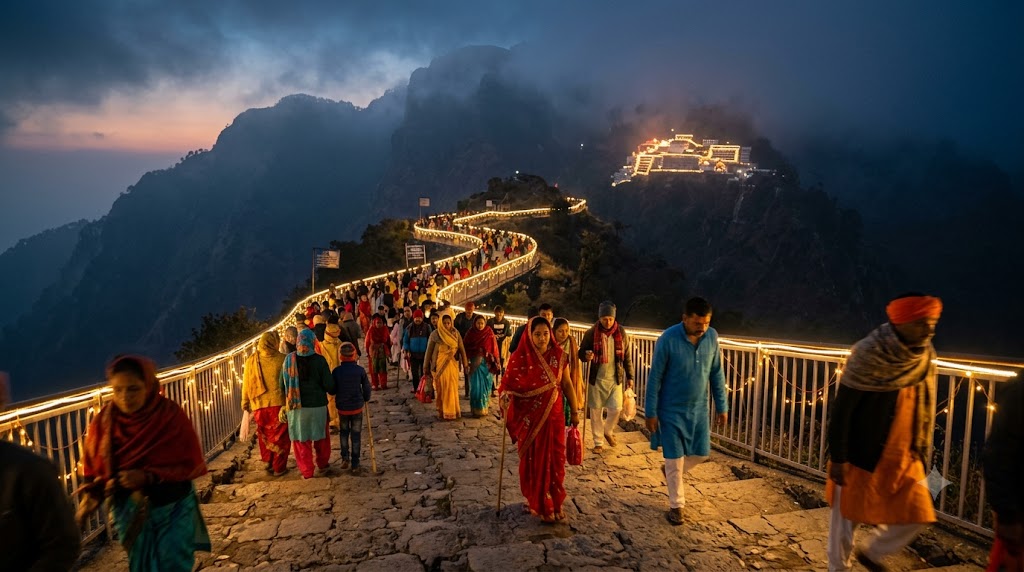
Of everywhere on this list, Vaishno Devi is the trip most travellers from Chandigarh, Mohali and Punjab actually take at least once — and the one most families still plan last-minute, on a WhatsApp forward and a hope. A Vaishno Devi package from Chandigarh or Amritsar deserves a bit more than that, because the yatra rewards planning: the right registration slot, the right mode of ascent for your group, and the right week on the calendar make the difference between a rushed, exhausting climb and the kind of trip people talk about for years. At Flywings Tour & Packages Pvt Ltd, we’ve been organising this exact pilgrimage for Punjab families since 2013. Here is everything to sort out before you book — in the order you’ll actually need it.
Quick facts before you plan: Katra is roughly 5–6 hours by road from Chandigarh (via Jammu), or a short flight/train to Jammu followed by an hour’s drive. The climb from Katra to the shrine is about 13 km — walkable, ponyable, or skippable by helicopter to Sanjichhat. Registration (the Yatra Parchi) is free and mandatory. The best months are March–April and September–October, once monsoon landslide risk has passed.
Step 1: Getting to Katra from Chandigarh or Amritsar
Katra, the base town for the yatra, is reachable three ways from Punjab — pick based on your group’s time and comfort, not habit:
| Route | Approx. Time | Best For |
|---|---|---|
| Road via Jammu (Chandigarh/Amritsar → Katra) | 5–6 hours from Chandigarh; 4–5 hours from Amritsar | Families with a private cab, flexible groups |
| Flight to Jammu, then road to Katra | ~1 hour flight + ~1.5 hour drive | Elderly travellers, short-leave trips, summer heat avoidance |
| Train to Jammu Tawi, then road to Katra | Varies by train; ~1.5 hour drive from Jammu | Budget groups, overnight travel to save a day |
Our honest advice for a first-timer group: road via Jammu is simplest for Punjab travellers, since it’s a known highway and needs no connection timing to get right. For elderly pilgrims or a genuinely tight weekend, flying into Jammu removes the most tiring stretch of the trip.
Step 2: Register for Your Yatra Parchi — Free, but Mandatory
Every pilgrim needs a Yatra Parchi (registration slip) to begin the climb — it’s free of cost and the process is simple, but skipping it or leaving it to Katra means longer queues:
- Register on the official Shri Mata Vaishno Devi Shrine Board portal as a new devotee, creating a Devotee ID.
- Select your preferred date and time slot for the climb.
- Download and print (or save digitally) your Yatra Parchi — you’ll need it at the Katra check-post before starting.
- The same portal handles room bookings, Aarti/Poojan slots, and battery-car bookings within Katra — worth doing together in one sitting.
Use only the official portal — third-party sites charging a “registration fee” are not legitimate; the yatra parchi itself is always free. We handle this registration as part of every Vaishno Devi package we book, timed to your travel dates.
Step 3: Choose Your Mode of Ascent
This is the decision that shapes your whole trip — and the one where “what worked for your neighbour” isn’t always right for your group:
| Mode | Time (One Way) | Best For | Watch-Out |
|---|---|---|---|
| Trek (on foot) | 5–7 hours | Fit adults, groups wanting the full devotional experience | 13 km uphill — pace yourself, carry water, start early |
| Pony / Palki | 4–6 hours | Elderly pilgrims, those with mobility limits, families with older kids | Book at official counters only; agree the fare before starting |
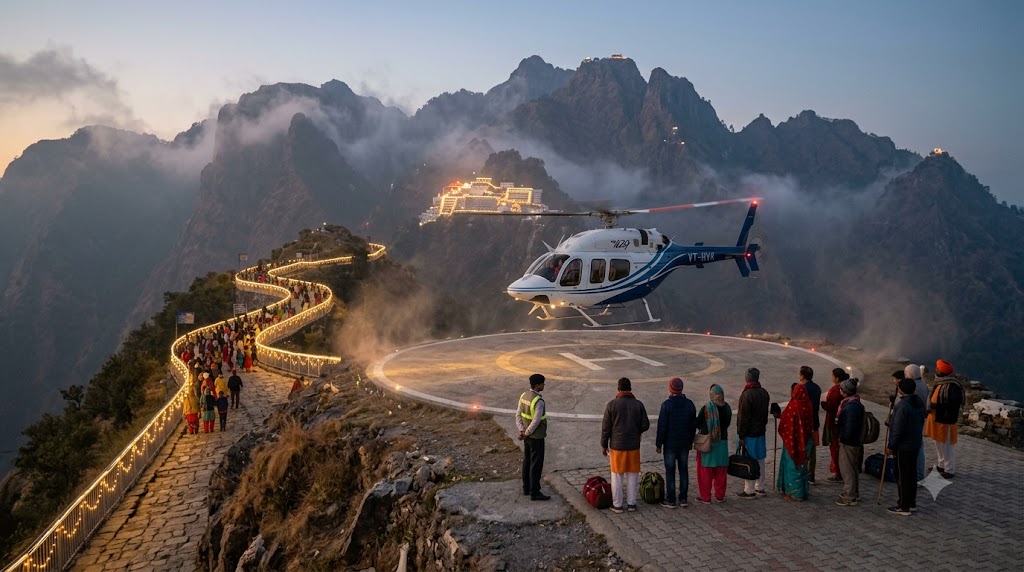
| Helicopter (to Sanjichhat) | ~5–8 minutes flight + short walk | Short-leave trips, elderly or unwell pilgrims, hot-season visits | Book up to 60 days ahead online; seats sell out fast around Navratri |
Step 4: Pick Your Week — The Best Time to Go
Vaishno Devi is open year-round, but the calendar genuinely changes the experience:
| Period | Conditions | Our Take |
|---|---|---|
| March – April | Pleasant, clear, moderate crowds | One of the two best windows of the year |
| May – June | Warm to hot, busy with summer holidays | Fine if you start the climb pre-dawn to beat the heat |
| July – August | Monsoon — lush but landslide-prone | Avoid if possible; if travelling, check road advisories daily |
| September – October | Clear post-monsoon skies, Sharad Navratri falls here | The golden window — best weather, but Navratri dates themselves are extremely crowded |
| November – February | Cold, occasional snow at higher points | Quiet and scenic, pack serious woollens |
If your dates are flexible, our practical tip: aim for the two-to-three weeks around Sharad Navratri rather than the festival days themselves — you get the same clear autumn weather with a fraction of the queue.
Step 5: What to Pack and Prepare
- Comfortable, broken-in walking shoes — this is not the trip for new sandals.
- A light jacket even in summer — evenings near the shrine are cooler than Katra.
- A refillable water bottle — stations along the route refill for free.
- A small daypack — lockers are available in Katra for anything you don’t want to carry up.
- Any government photo ID for every traveller — required at the check-post alongside your Yatra Parchi.
- Cash in small denominations — for pony/palki fares and en-route stalls, though UPI works at most fixed counters now.
Where to Stay in Katra
Katra’s hotels range from simple guesthouses to comfortable mid-range properties, and location matters more than star rating for this particular trip:
- Near the Banganga check-post / Yatra starting point: the most convenient tier — you start walking (or catch your pony/helicopter transport) within minutes, which matters most if you’re beginning before sunrise.
- Katra Main Bazaar: the widest choice of hotels and easiest access to food, shops and the railway/bus station, a short auto ride from the starting point.
- Quieter outskirts: better rates and more parking space for private vehicles, at the cost of a slightly longer transfer to the check-post.
We book hotels in the tier that matches your climb plan — right by the check-post for an early helicopter slot, or Main Bazaar for a more relaxed trekking start.
Vaishno Devi for Kids, Elderly Pilgrims and Large Groups
- With young children: pony or palki covers the distance without exhausting little legs; battery cars (booked on the same official portal) cover the flatter stretches within Katra itself.
- With elderly parents: the helicopter to Sanjichhat is the single biggest comfort upgrade available — book it as early as your 60-day window allows, especially around Navratri.
- Large family or society groups: we coordinate group hotel blocks in Katra and staggered registration slots so the group climbs together rather than getting split across different time windows — tell us your headcount early, since Navratri-season room blocks fill up months ahead.
Combining Vaishno Devi with Amritsar or Kashmir
Because Katra sits on the Chandigarh–Jammu–Srinagar road corridor, many of our clients extend a Vaishno Devi trip rather than treating it as a standalone weekend:
- + Golden Temple, Amritsar: roughly on the way for road travellers from Punjab — an easy add-on for a longer, more complete pilgrimage circuit.
- + Kashmir: Jammu is the gateway city for both — pilgrims continuing north into the Kashmir Valley can combine the yatra with our Kashmir tour package itinerary on the same trip.
What to Budget For
Vaishno Devi is genuinely one of the more affordable pilgrimages to plan, but a few cost categories are worth knowing about before you go, even without fixed figures here — every quote we prepare itemises these individually:
- Registration (Yatra Parchi): free, always.
- Transport from Chandigarh/Amritsar: varies by private cab vs shared travel vs flight-to-Jammu.
- Pony, palki or helicopter: the biggest variable cost — helicopter costs the most but saves the most time and effort.
- Katra hotel: varies by proximity to the check-post and season, with Navratri commanding the highest rates.
- Meals and en-route purchases: modest — Katra and the yatra route both have plenty of affordable food options, including free langar at points along the way.
Share your group size and preferred ascent mode and we’ll send an itemised quote covering all of the above within 24 hours.
A Realistic Trip Timeline
For most Chandigarh families, this is how a Vaishno Devi trip actually fits together:
- Day 1: Travel from Chandigarh/Amritsar to Katra, check in, complete registration if not done online in advance.
- Day 2: Pre-dawn or early-morning start up the hill (trek/pony/helicopter), darshan, descend or return by helicopter, rest in Katra.
- Day 3: Optional — visit Katra’s local sights or begin the return journey; some families extend with a short Jammu city stop (Bahu Fort, Raghunath Temple) before heading home.
Two nights / three days covers this comfortably without rushing the darshan itself, which is the part no one wants to hurry.
Frequently Asked Questions
How many days are needed for the Vaishno Devi yatra from Chandigarh?
Two nights, three days is the comfortable standard — one day to travel and settle in, one for the climb and darshan, and a buffer day for rest or a Jammu city stop before heading home. It can be compressed to a long weekend using a flight to Jammu and the helicopter option.
Is the Vaishno Devi trek difficult?
The 13 km climb is steady but manageable for most reasonably fit adults, done at your own pace with rest points throughout. For elderly pilgrims, young children, or anyone with mobility concerns, the pony, palki or helicopter options make the shrine fully accessible without the full trek.
How do I book the Vaishno Devi helicopter?
Helicopter bookings open via the official Shrine Board portal up to 60 days in advance and are first-come, first-served — seats around Navratri and other peak weekends sell out quickly. We handle this booking as part of every package, timed to your travel dates.
Is Yatra Parchi registration really free?
Yes, completely — registration is free of charge on the official portal. Be cautious of any third-party site charging a “registration fee”; that is not an official cost.
What is the best time to visit for pleasant weather and fewer crowds?
March–April and the weeks around (not exactly during) Sharad Navratri in September–October offer the best combination of clear weather and manageable crowds. Avoid peak monsoon (July–August) due to landslide risk, and expect the heaviest crowds during Navratri itself.
Can I combine Vaishno Devi with a Golden Temple or Kashmir trip?
Very easily — Katra sits on the Chandigarh–Jammu–Srinagar corridor, so an Amritsar stop works naturally on the way, and Jammu is the same gateway city pilgrims use to continue on to Kashmir. We regularly plan combined itineraries covering two or three of these in one trip.
Can Flywings arrange the full Vaishno Devi trip, not just transport?
Yes — registration, Katra hotel booking, private transport from Chandigarh or Amritsar, and helicopter or pony arrangements can all be handled as one itemised package. See more domestic circuits on our India tour packages from Chandigarh page.
Plan Your Yatra With a Desk That’s Done This Before
Vaishno Devi is one trip where local logistics knowledge — which Katra hotels are genuinely close to the check-post, which weeks to avoid, how to lock a helicopter slot before it sells out — makes a real difference to how the trip feels. Tell us your dates and group size, and we’ll build the itinerary around them. Explore more of our India tour packages, or reach us directly:
- Call / WhatsApp: +91 99143 10333 · Landline: 0172-4736185
- Email: sales@flywingstour.co.in
- Visit us: SCF 29, First Floor, Phase 7, Mohali (Chandigarh Tricity) — get directions
Written by Sukhjinder Kaur, Senior Travel Content Writer at Flywings Tour & Packages Pvt Ltd — planning pilgrimages and holidays from Mohali, Punjab since 2013. Registration processes and seasonal guidance verified as of July 2026; yatra rules and weather can change, so confirm current details when you enquire.
Sukhjinder Kaur is a premium travel content writer specialising in the tourism industry. She writes Flywings' destination guides, fare-saving playbooks and visa explainers — every piece researched with the agency's ticketing and visa desks before it is published.
View full profile