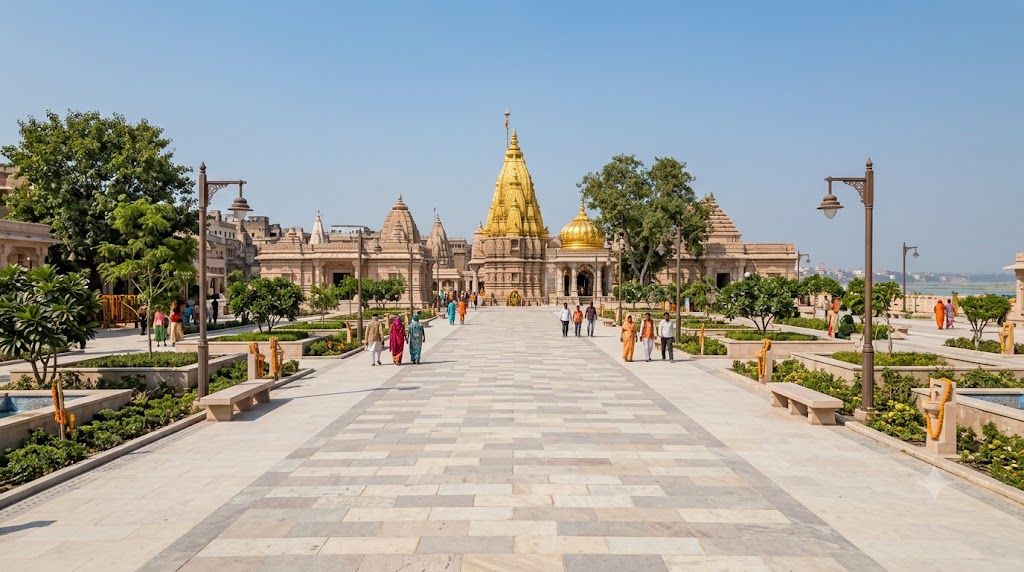
If your mental image of visiting Kashi Vishwanath Temple is a narrow, congested lane leading to a cramped darshan queue, that image is outdated. The 2021 Kashi Vishwanath Corridor redevelopment replaced that lane with a wide, landscaped plaza connecting the temple directly to the Ganga, and the numbers since have been dramatic, over 46 crore visitors and roughly 1.25 lakh crore rupees added to the state economy. Varanasi searches are up 120 percent this year, and the city has overtaken Goa and Shimla as India’s fastest-growing tourism hub. What most existing “Varanasi package from Chandigarh” content will not tell you is exactly how different the visit itself now feels compared to before. This guide starts there. We checked close to a dozen top-ranking Varanasi package pages for Chandigarh departures while researching this guide, and not one described the corridor’s physical layout in any real detail, most simply list “Kashi Vishwanath Temple visit” as a bullet point identical to how it would have read in 2019, before any of this infrastructure existed.
Why This Matters Beyond Just Sightseeing
The corridor rebuild is not just a convenience upgrade, it changes the itinerary math itself. A pre-2021 Varanasi trip often budgeted extra time simply for navigating the congested approach to the temple, factoring in unpredictable queue lengths and slow movement through narrow lanes. That time buffer is largely unnecessary now, which means a well-planned itinerary today can comfortably fit more, an extra Sarnath visit, a second Aarti viewing from a different ghat, a proper old-city food walk, into the same number of days a pre-corridor trip would have needed just to cover the basics.
Quick context: The Kashi Vishwanath Corridor did not just widen a lane, it fundamentally changed how the temple visit and the Ganga connect physically. If you or anyone you are travelling with visited Varanasi before 2021, plan for a genuinely different experience this time.
What Actually Changed
| Before the Corridor (Pre-2021) | After the Corridor (2026) |
|---|---|
| A narrow, congested lane led from the ghats to the temple, often a slow, jostling walk | A wide, landscaped plaza directly connects the temple complex to the Ganga, a five-minute walk that feels nothing like the old approach |
| Limited amenities near the temple, minimal seating or shade | Purpose-built facility blocks, seating areas, and shaded walkways integrated into the corridor design |
| Congestion made a rushed, transactional darshan common, especially for first-timers unfamiliar with the layout | The more open layout allows a slower, more contemplative visit even during busy periods |
| Around 6 million annual visitors before the redevelopment began | Over 46 crore cumulative visitors since December 2021, with the city crossing 11 crore visitors in 2024 alone |
The practical takeaway for anyone planning this trip: do not build your expectations, or your time estimate for the temple visit, around an old description of Varanasi. The whole point of entry to the city’s most important site has been rebuilt.
Getting There from Chandigarh
There is no fully direct Chandigarh-Varanasi flight on most carriers, but connectivity has genuinely improved. Multiple daily connecting options run via Delhi, and Air India alone operates a significant number of flights on routes touching both cities, with a typical journey involving a short layover rather than a long one. Delhi itself connects to Varanasi directly in around an hour and ten to twenty minutes, with Air India running several daily non-stop flights on that specific leg, so a Chandigarh-Delhi hop followed by a short Delhi-Varanasi flight is the most reliable routing. For travellers who enjoy train journeys, the Varanasi-New Delhi Vande Bharat Express is also a genuinely comfortable option for the Delhi-Varanasi leg specifically.
The Core Experience: Ghats, Temple, Aarti
Kashi Vishwanath Temple
One of the twelve Jyotirlinga temples, among the most sacred Shiva sites in Hinduism, the current structure dates to the 18th century with its distinctive gold-plated spire. The Mangala Aarti, held around 3 AM, is widely considered the most spiritually significant darshan of the day, though it requires advance booking and an early start that not every itinerary can accommodate.
Dashashwamedh Ghat and the Evening Ganga Aarti
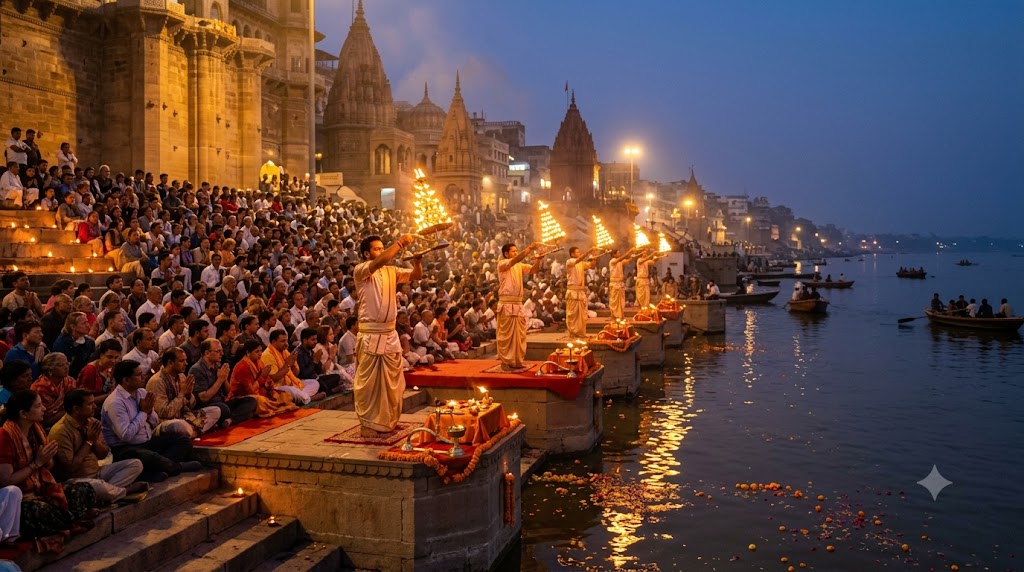
The most famous of Varanasi’s ghats and the site of the nightly Ganga Aarti, a ceremony of synchronised lamp offerings performed by priests facing the river. It begins around 6:45 to 7:00 PM in winter and slightly later, around 7:00 to 7:15 PM, in summer, running for roughly 45 minutes to an hour. Arrive at least 30 to 45 minutes early to secure a decent viewing spot, or book a boat on the river itself for a genuinely different vantage point than watching from the ghat.
Manikarnika Ghat
One of the city’s cremation ghats, and a site many visitors find genuinely moving rather than uncomfortable once they understand its significance in Hindu belief around death and liberation. Visit respectfully, avoid photography unless explicitly permitted, and consider going with a knowledgeable guide who can explain the rituals rather than observing without context.
Sarnath: The Easy Half-Day Addition
Just 10 kilometres from Varanasi, a 25-to-45-minute drive depending on traffic, Sarnath is where Buddha delivered his first sermon after attaining enlightenment. The Dhamek Stupa, the archaeological museum housing the original Ashoka Lion Capital, now India’s national emblem, and the deer park together make for a full but comfortable 3-to-4-hour visit. Nearly every well-planned Varanasi itinerary treats Sarnath as a straightforward same-trip addition rather than a separate journey, and there is little reason not to.
A Sample 3-Day Itinerary
- Day 1: Arrive Varanasi, Kashi Vishwanath Temple and the new corridor plaza, evening Ganga Aarti at Dashashwamedh Ghat
- Day 2: Early morning boat ride on the Ganga at sunrise, ghat walk covering Manikarnika and Assi Ghat, afternoon at leisure through the old-city lanes and markets, second evening Aarti from a different vantage point if desired
- Day 3: Sarnath half-day, Banaras Hindu University campus and its own Vishwanath Temple replica, departure
Two days is workable for a tightly focused trip, temple and Aarti on day one, Sarnath and a ghat walk on day two, but three days lets the pace breathe, particularly around the sunrise boat ride, which loses much of its appeal if rushed.
Best Time to Visit
| Window | Conditions |
|---|---|
| November to February | The clear peak window, comfortable temperatures for the ghat walks and early-morning boat rides, and when malaiyo, a Varanasi seasonal sweet delicacy, is available |
| March to May | Genuinely hot, particularly uncomfortable for the extended outdoor time a ghat-focused itinerary requires |
| July to September | Monsoon season; the Ganga’s water level rises significantly and can submerge lower ghat steps, changing the boat and Aarti experience considerably |
| Major festivals (Dev Deepawali, Mahashivratri) | Spectacular but extremely crowded, worth it for the specific atmosphere but requiring advance hotel booking well ahead of the date |
The Sunrise Boat Ride, Done Properly
This is the single experience most visitors rate above everything else, and it is worth planning around rather than squeezing in. A wooden boat departs before sunrise, typically from Assi Ghat or Dashashwamedh Ghat, and drifts along the riverfront as the city wakes, priests beginning their morning rituals, bells ringing from temples along the bank, and the light changing across the ghats’ stone steps in a way photographs rarely capture properly. A private boat costs more than a shared one but is worth it for the quieter, unhurried pace, particularly if photography is a priority. Book the previous evening directly with a boatman or through your hotel rather than assuming availability on the morning itself during peak season.
Walking the Old City
Beyond the temple and the ghats, Varanasi’s old-city lanes, particularly around Vishwanath Gali, are worth a slow, unstructured wander. Narrow enough that vehicles cannot enter, lined with shops selling Banarasi silk sarees, brass items, and religious artefacts, and threaded with small eateries serving food that rarely makes it onto a hotel restaurant menu. This is not a sight to check off a list so much as a texture of the city worth simply absorbing for an hour or two, ideally with no fixed destination in mind.
What to Eat
Varanasi’s food culture is a genuine part of the city’s identity, distinct enough to justify planning meals around rather than treating as an afterthought.
- Kachori sabzi, a classic Varanasi breakfast, fried bread with a spiced vegetable curry, found at small stalls throughout the old city and best eaten fresh and hot in the morning
- Banarasi paan, a betel-leaf preparation the city is famous for nationally, worth trying at least once from a reputed local vendor rather than a tourist-facing stall
- Malaiyo, a delicate, foam-like milk dessert available only during the winter months, roughly November to February, a genuinely seasonal specialty worth timing a trip around if dessert is a priority
- Thandai, a spiced, chilled milk drink particularly associated with festivals, refreshing after a hot day of sightseeing outside the peak winter window
- Chaat and street food generally, Varanasi’s old-city lanes are considered among the best street-food destinations in North India, though standard travel-hygiene precautions apply as anywhere
Vegetarian travellers will find Varanasi one of the easiest Indian cities to navigate, given its deep vegetarian food culture tied to its status as a major pilgrimage destination.
Etiquette and Practical Notes
- Dress modestly for temple visits, shoulders and knees covered, and be prepared to remove footwear and, at Kashi Vishwanath specifically, leave phones and bags at a designated counter before entering the inner sanctum.
- Approach Manikarnika Ghat respectfully, photography is generally discouraged or restricted near the cremation activity, and a guide’s context makes the visit considerably more meaningful than observing without explanation.
- Carry cash for the old-city lanes, where card acceptance remains limited among smaller vendors and boatmen.
- Book Mangala Aarti access in advance if you want the 3 AM darshan specifically, since it requires prior registration rather than a walk-in queue.
Varanasi vs Ayodhya
Since both Uttar Pradesh pilgrimage cities have seen dramatic tourism growth in recent years and are often compared, here is the honest distinction.
| Factor | Varanasi | Ayodhya |
|---|---|---|
| Primary significance | One of Hinduism’s oldest continuously inhabited spiritual cities, centred on Shiva worship at Kashi Vishwanath | The birthplace of Lord Ram, centred on the newly consecrated Ram Mandir since January 2024 |
| Character | A dense, ancient old city with the Ganga ghats as its defining feature | A rapidly modernising pilgrimage city built substantially around the new temple complex |
| Recent transformation | The 2021 Kashi Vishwanath Corridor redevelopment | The 2024 Ram Mandir consecration and surrounding infrastructure build-out |
| Combinable | Yes, roughly 200 kilometres apart, a genuinely common combined itinerary for pilgrims covering both in one trip | Yes, for the same reason |
Given the distance between them, a combined Varanasi-Ayodhya itinerary is worth genuine consideration for pilgrims with five or more days available, and it is a combination we build regularly for clients wanting to cover both of Uttar Pradesh’s major spiritual transformation stories in one trip. For Punjab-based pilgrims specifically, we also see this combined comfortably with a Golden Temple visit at the start or end of the trip, covered in more detail in our Golden Temple Amritsar guide, given how naturally a Chandigarh departure already routes through that leg.
Varanasi for Family and Group Trips
The corridor redevelopment specifically has made this a considerably easier trip for multi-generational families than it used to be, wider walkways, better seating, and a more manageable temple approach all reduce the physical strain that used to make Varanasi a genuinely tiring visit for older travellers. The boat ride is calm and suits most ages and fitness levels, and the old-city walk can be paced to whatever the group is comfortable with. For larger pilgrimage groups specifically, advance coordination on Aarti viewing spots and Mangala Aarti registration matters more than for a solo or couple’s trip, worth handling through a tour operator who can secure group arrangements ahead of arrival.
Cost Shape, Without Fixed Numbers
We are not publishing fixed price tags, since cost depends on season, hotel proximity to the ghats, and whether you book a private boat versus a shared one, but the relative shape is favourable. Varanasi remains one of the more affordable domestic pilgrimage-and-culture trips available, current spending data shows visitors from outside Uttar Pradesh averaging around 8,000 rupees per person across the full trip including travel, boarding, and typical purchases, a genuinely accessible figure for a short domestic break. Reach out and we will build a real, itemised quote for your dates within 24 hours, no obligation.
Who This Trip Suits
- Pilgrimage and spiritually motivated travellers, for whom the corridor redevelopment has made the core darshan experience meaningfully more comfortable than it used to be
- First-time visitors who have heard “Varanasi is chaotic” secondhand, and want to see how much the corridor area specifically has changed that reputation, even as the old-city lanes retain their original character
- Photography and culture enthusiasts, given the Ganga Aarti’s visual drama and the old city’s genuinely unique streetscape
- Multi-generational family trips, since the corridor’s wider walkways and better amenities have made the temple visit specifically more manageable for older travellers than it used to be
Booking Timing
Two windows are worth planning around specifically. The November-to-February peak season, when malaiyo is in season and temperatures are most comfortable for the extended outdoor time this trip requires, sees genuinely tight hotel availability near the ghats and is worth booking two to three months ahead. Major festival dates, particularly Dev Deepawali and Mahashivratri, see the sharpest spikes of all, hotel rates and availability both move considerably, and booking three to four months ahead is realistic for these specific dates given how far in advance serious pilgrims and photographers plan around them.
Frequently Asked Questions
What actually changed with the Kashi Vishwanath Corridor?
The narrow lane that used to connect the ghats to the temple was replaced with a wide, landscaped plaza offering a direct, five-minute walk between the Ganga and the temple complex, along with proper seating, shade, and facility blocks that did not previously exist.
Is there a direct flight from Chandigarh to Varanasi?
Not fully direct on most carriers, but connectivity is strong via Delhi, a short Chandigarh-Delhi hop followed by a direct Delhi-Varanasi flight of roughly 70 to 80 minutes, with several daily departures.
How many days does a Varanasi trip need?
Two days covers the essentials, the temple, the corridor, and one Ganga Aarti. Three days is recommended for a more comfortable pace that properly includes a sunrise boat ride and a full Sarnath half-day without feeling rushed.
What time is the Ganga Aarti?
Around 6:45 to 7:00 PM in winter and 7:00 to 7:15 PM in summer, running for approximately 45 minutes to an hour at Dashashwamedh Ghat. Arrive 30 to 45 minutes early for a good viewing spot.
Is Sarnath worth adding to a Varanasi trip?
Yes, and easily. It is only 10 kilometres away, a 25-to-45-minute drive, and the full visit, including the Dhamek Stupa and the archaeological museum, takes just 3 to 4 hours, making it a straightforward same-trip addition rather than a separate journey.
Is Varanasi safe for families and older travellers?
Yes, and the corridor redevelopment specifically has made the core temple-and-ghat experience more manageable for older travellers than the pre-2021 layout, with wider walkways and better amenities than existed before.
Can Varanasi be combined with Ayodhya in one trip?
Yes, the two cities sit roughly 200 kilometres apart, and a combined itinerary is a common and practical choice for pilgrims wanting to cover both of Uttar Pradesh’s major recent spiritual transformation stories, the Kashi Vishwanath Corridor and the Ram Mandir, in a single five-or-more-day trip.
Is Varanasi crowded, and does the corridor help with that?
Varanasi does draw large crowds, particularly during festivals and the November-to-February peak season, but the corridor’s wider plaza layout genuinely handles crowd flow better than the old narrow lane did, even if the city’s overall visitor numbers are considerably higher than before.
See the City the Corridor Actually Rebuilt
A generic package built from an outdated description of Varanasi will undersell exactly what makes this trip worth planning right now, a genuinely transformed core pilgrimage experience layered onto the city’s centuries-old character. Explore more India tour packages from Chandigarh, or call us directly at +91 99143 10333 for an itinerary that reflects the city as it actually is today. Flywings team since 2013.
Sukhjinder Kaur is a premium travel content writer specialising in the tourism industry. She writes Flywings' destination guides, fare-saving playbooks and visa explainers — every piece researched with the agency's ticketing and visa desks before it is published.
View full profile