Almost every “Bhutan for Indians” article repeats the same headline, no visa required, and stops there, as though that settles the paperwork question. It does not. At Flywings Tour & Packages Pvt Ltd, the single most common mid-trip surprise we hear about from clients who booked Bhutan independently is discovering, once they are already in Thimphu, that their permit does not actually cover where they wanted to go next. This guide exists to fix that gap, and to cover what genuinely changed in 2026, before getting into the route itself. We checked a dozen of the top-ranking “Bhutan package from Chandigarh” results while researching this piece, and while most correctly state that no visa is needed, almost none draw the actual distinction that matters once you are planning an itinerary beyond a short Thimphu-Paro loop.
Quick context: No visa is needed for Indian citizens visiting Bhutan, but a standard Entry Permit only covers Thimphu and Paro. Anywhere beyond those two towns, Punakha, Bumthang, Phobjikha, requires a separate, free Route Permit obtained after arrival. Missing this distinction is the most common planning mistake we see.
What Changed in 2026
| What’s New | What It Means for You |
|---|---|
| SDF rate extension | The discounted Sustainable Development Fee for Indian nationals, INR 1,200 per person per night, has been extended through September 30, 2027, longer certainty than travellers planning a 2027 trip might expect |
| New 5 percent GST on tourism services | Applies to hotel stays, guided tours, and other tourism services booked within Bhutan, a genuinely new cost layer most pre-2026 guides do not mention |
| Gelephu Mindfulness City development | A major new development project in southern Bhutan, still under construction, not yet a standard tourist stop but increasingly referenced in current Bhutan coverage |
The Two-Permit System, Explained Properly
The Standard Entry Permit
Applied for online in advance and issued on arrival at Paro International Airport by immigration authorities. This permit covers Thimphu, the capital, and Paro, where the airport sits and where the iconic Tiger’s Nest monastery is located. For a short trip focused on just these two towns, this is genuinely all the paperwork you need.
The Route Permit, for Everywhere Else
If your itinerary includes Punakha, the former capital and home to one of Bhutan’s most photographed dzongs, Bumthang’s Buddhist heritage sites, or Phobjikha Valley’s black-necked crane habitat, you need a separate Route Permit. It is free and typically issued within about an hour at the Department of Immigration office in Thimphu, but it is a step, not an automatic extension of your entry permit, and travellers who assume otherwise sometimes lose a planning day sorting it out once they realise.
The practical takeaway: if your Bhutan itinerary is more than a Thimphu-Paro loop, plan for the Route Permit as a deliberate first-day task in Thimphu, not an afterthought.
Getting There from Chandigarh
Only two airlines fly into Paro International Airport, Druk Air and Bhutan Airlines, and both operate primarily from Delhi, alongside Kolkata, Bagdogra, Guwahati, and Mumbai. Druk Air runs direct Delhi-Paro flights several times a week, a flight of just under three hours. From Chandigarh, that means a short domestic hop to Delhi followed by one direct international leg into Paro, no second connection required once you reach Delhi.
The Route
Paro, 1 to 2 Days
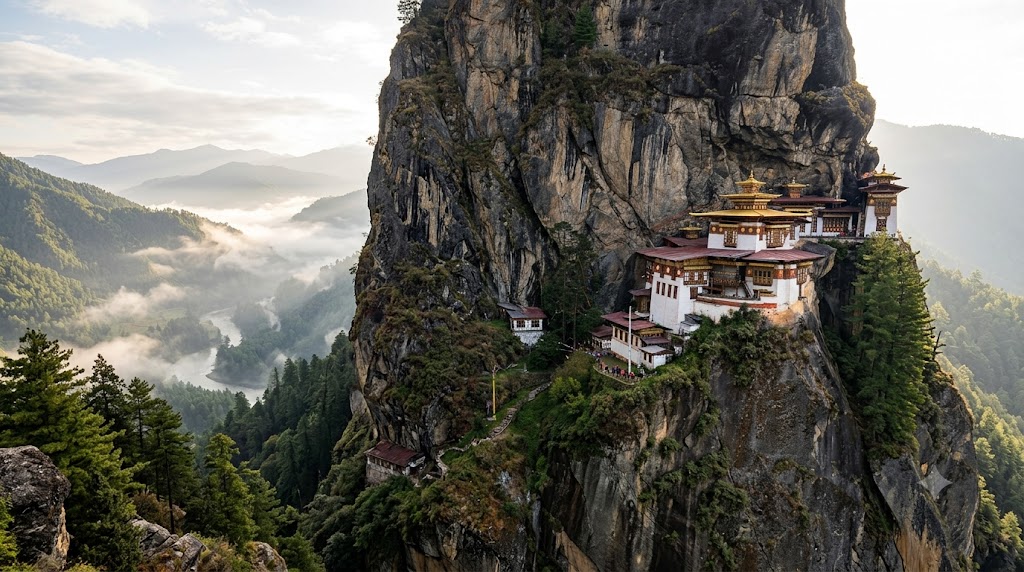
The Tiger’s Nest monastery, Paro Taktsang, perched dramatically on a cliff face, is the single most recognisable image of Bhutan and the reason most visitors build in real time here rather than rushing through. The hike up is genuinely demanding, several hours round trip at altitude, worth pacing rather than treating as a quick stop.
Thimphu, 2 Days
The capital, and where your Route Permit gets sorted if your trip extends further. Beyond the paperwork, Thimphu’s weekend market, the giant Buddha Dordenma statue overlooking the valley, and the National Memorial Chorten anchor a proper two-day stay.
Punakha, 1 to 2 Days (Requires Route Permit)
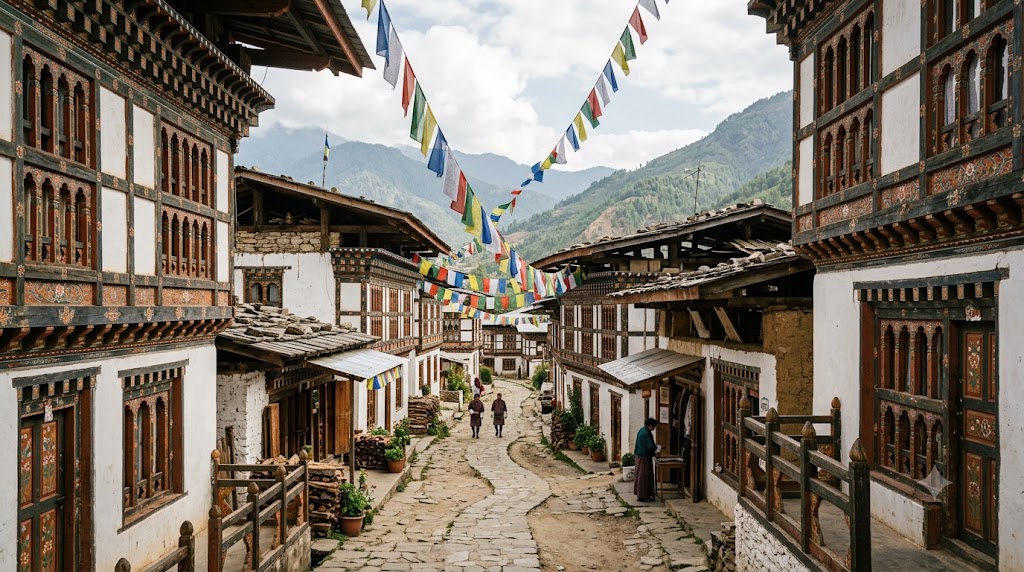
A dramatic mountain drive from Thimphu over the Dochula Pass, often lined with prayer flags and, on a clear day, Himalayan peak views. Punakha Dzong itself, set at the confluence of two rivers, is widely considered Bhutan’s most beautiful fortress-monastery.
A Sample 6-Day Itinerary
- Day 1: Arrive Paro, settle in, evening at leisure
- Day 2: Tiger’s Nest hike, a full day given the altitude and distance
- Day 3: Drive to Thimphu, Route Permit processed, city sightseeing begins
- Day 4: Full Thimphu day, weekend market, Buddha Dordenma, National Memorial Chorten
- Day 5: Drive to Punakha via Dochula Pass, Punakha Dzong
- Day 6: Return to Paro via Thimphu, departure
This pacing treats the Route Permit as a first-priority task on arrival in Thimphu specifically so it does not delay the Punakha leg later in the trip.
Best Time to Visit
| Window | Conditions |
|---|---|
| March to May | Spring, rhododendrons in bloom, generally considered the best window alongside autumn |
| September to November | Clear skies, comfortable temperatures, the other peak window, and when several of Bhutan’s major festivals (tshechus) take place |
| June to August | Monsoon season, workable but with a higher chance of disrupted mountain views and road delays |
| December to February | Cold, particularly in the evenings, but clear and quiet, a genuinely good window for travellers prioritising fewer crowds over the mildest weather |
Extending Further: Bumthang and Phobjikha Valley
For travellers with ten days or more, Bhutan’s central valleys reward the extra Route Permit-covered distance. Bumthang, considered the spiritual heartland of Bhutan, is home to some of the country’s oldest and most significant Buddhist temples, a genuinely different, quieter pace than the Paro-Thimphu-Punakha circuit most first-time visitors stick to. Phobjikha Valley, a glacial valley that hosts endangered black-necked cranes migrating from Tibet each winter, offers a completely different landscape, wide, open, and pastoral rather than mountainous. Both require the Route Permit and add genuine driving time, worth it specifically for travellers who have already done the standard circuit or who have the days to spare on a first visit.
What to Eat
Bhutanese food is distinctly spicier than most visitors expect from a Himalayan cuisine, built around chillies treated as a vegetable rather than a garnish.
- Ema datshi, Bhutan’s national dish, chillies cooked in a thick cheese sauce, genuinely spicy and worth trying even for those cautious about heat, since it defines the local palate
- Red rice, a Bhutanese staple, nuttier and denser than the white rice most Indian travellers are used to
- Momos, Tibetan-influenced dumplings, found everywhere from street stalls to hotel restaurants
- Suja (butter tea), salty rather than sweet, a genuine part of Bhutanese hospitality tradition worth trying at least once
- Ara, a local rice or grain spirit, traditionally offered during festivals and family gatherings
Vegetarian travellers are generally well catered for, given Bhutan’s strong Buddhist dietary tradition, though the spice level in most local dishes is worth flagging to your guide in advance if you prefer milder food.
Bhutan vs Georgia vs Uzbekistan
Since all three have become increasingly popular picks for Indian travellers seeking a culturally rich, less-crowded alternative to the standard international circuit, here is the honest comparison. Our Georgia guide and Uzbekistan guide cover the other two in more depth.
| Factor | Bhutan | Georgia | Uzbekistan |
|---|---|---|---|
| Documentation | No visa, entry permit plus SDF, straightforward but genuinely two-tiered | Paid e-visa plus 2026 DuVerify step and mandatory insurance | Paid e-visa, straightforward single step |
| Flight from Delhi | Direct, under 3 hours | Direct, roughly 6.5 hours | Direct, under 3 hours |
| Core appeal | Living Buddhist culture, mountain monasteries, deliberately low tourist volume | Mountains, wine country, European old-town feel | Silk Road architecture, desert cities |
| Best fit | Travellers wanting a genuinely uncrowded, spiritually significant Himalayan trip | Nature and mountain-scenery-focused travellers | History and architecture-focused travellers |
Our honest read: Bhutan wins clearly for travellers who specifically want the low-crowd, high-significance experience its tourism policy is built around, nothing else on this list, or arguably in the region, replicates that deliberate scarcity.
Etiquette Notes
- Dress modestly when visiting dzongs and monasteries, shoulders and knees covered, and a long scarf (kabney) is required for certain formal areas, usually provided or arranged by your guide.
- Remove footwear before entering temple interiors, and photography is often restricted inside, worth checking with your guide at each specific site.
- Bhutan operates a “high value, low volume” tourism philosophy deliberately, so expect a more structured, guided experience than a fully independent trip in most other countries, guides are effectively mandatory for most itineraries beyond Thimphu and Paro.
Bhutan for Family and Group Trips
The Thimphu-Paro-Punakha circuit suits families reasonably well, though the Tiger’s Nest hike specifically involves genuine physical exertion worth weighing for older travellers or young children, a partial hike to the viewpoint café is a common compromise for anyone not attempting the full climb. For groups, the SDF’s clear per-person, per-night structure makes budgeting genuinely predictable compared to destinations with more variable fee structures, and Route Permit processing scales reasonably well for group bookings handled through one operator rather than individually.
Booking Timing
The March-to-May and September-to-November windows are Bhutan’s clear peak seasons, and hotel availability, particularly in Paro and Punakha, tightens accordingly. Booking two to three months ahead for either window is a sensible buffer, and slightly more for the autumn festival season specifically, since several of Bhutan’s most significant tshechus draw both domestic and international visitors who plan well ahead.
Cost Shape, Without Fixed Numbers
We are not publishing fixed price tags, since cost depends on trip length, hotel category, and how far your itinerary extends beyond Thimphu and Paro, but the relative shape is worth knowing. The Sustainable Development Fee, at the discounted Indian rate, is charged per person per night and is a fixed, predictable cost you can plan around exactly, unlike destinations where fees vary by season or operator. The new 5 percent GST applies on top of standard tourism services, a genuinely new line item worth confirming is included in any quote you receive rather than discovering as an add-on later. Reach out and we will build a real, itemised quote for your dates within 24 hours, no obligation.
Who This Trip Suits
- Travellers drawn to Buddhist culture and architecture, given Bhutan’s monasteries, dzongs, and living religious tradition throughout the itinerary
- Couples and honeymooners wanting a Himalayan trip with a distinctly different character from Kashmir or Himachal, worth comparing against our Kashmir guide if you are weighing Himalayan options generally
- Photography enthusiasts, particularly around the Tiger’s Nest and Punakha Dzong
- Travellers who value a genuinely uncrowded, well-preserved destination, Bhutan’s “high value, low volume” tourism policy is deliberate, and it shows in how uncongested even the main sights feel compared to more mainstream Himalayan circuits
Frequently Asked Questions
Do Indians need a visa for Bhutan?
No visa is required, but a valid passport (or voter ID card, OCI cards are not accepted) and an entry permit are both required, applied for online in advance and issued on arrival.
What is the difference between the Entry Permit and the Route Permit?
The standard Entry Permit covers Thimphu and Paro only. A separate, free Route Permit, obtained at the Department of Immigration office in Thimphu, is required for anywhere else, including Punakha, Bumthang, and Phobjikha Valley.
What is the Sustainable Development Fee?
A per-person, per-night government levy funding Bhutan’s tourism and environmental programmes. Indian nationals pay a discounted rate of INR 1,200 per night, extended through September 2027, considerably less than the USD 100 per night rate other international visitors pay.
Is there a direct flight from Chandigarh to Bhutan?
Not from Chandigarh directly, but Delhi has direct Druk Air flights to Paro several times a week, a flight of just under three hours, so the trip is a short domestic hop to Delhi followed by one direct international leg.
How many days does a Bhutan trip need?
Six days covers Paro, Thimphu, and Punakha comfortably. Four days works for a Thimphu-Paro-only trip that skips the Route Permit process entirely.
Is the new GST charge included in package quotes?
It should be, and it is worth confirming explicitly with any operator, since the 5 percent tourism services GST is a genuinely new 2026 addition that an outdated quote template might not yet include.
Can I travel independently in Bhutan, or do I need a guide?
For destinations beyond Thimphu and Paro specifically, a guide is effectively required as part of standard Route Permit-linked travel, consistent with Bhutan’s structured, low-volume tourism approach. This is not a bureaucratic inconvenience so much as how the country’s tourism model is deliberately built.
Is Bhutan expensive compared to other Himalayan destinations?
The Sustainable Development Fee adds a predictable per-night cost most other Himalayan destinations do not have, but the discounted Indian rate keeps the overall trip broadly comparable to a mid-range Kashmir or Himachal holiday once flights and hotels are factored in together.
Plan the Permits Properly, Not Just the Sightseeing
A Bhutan itinerary planned around “no visa needed” alone misses the actual paperwork decision that matters, whether your trip needs a Route Permit and when to get it sorted. Explore more international tour packages from Chandigarh, compare it against our Uzbekistan guide if you are weighing a culturally rich, less-crowded Asian destination generally, or call us directly at +91 99143 10333 for an itinerary with both permits planned in from day one, whether that is a focused four-day Thimphu-Paro trip or the fuller circuit with Punakha and beyond built in. Flywings team since 2005.
Sukhjinder Kaur is a premium travel content writer specialising in the tourism industry. She writes Flywings' destination guides, fare-saving playbooks and visa explainers — every piece researched with the agency's ticketing and visa desks before it is published.
View full profile