Ladakh’s permit system changed this year, and if the last “Ladakh package from Chandigarh” article you read was written before 2026, it is describing a process that no longer fully applies. At Flywings Tour & Packages Pvt Ltd, we have been sending groups from the Tricity up to Leh for years, and the calls we get now are different from a year ago, less confusion about paperwork, more genuine questions about how many days to actually block off. This guide covers what changed with the permits, then treats the one thing that actually determines whether a Ladakh trip goes well: altitude acclimatisation, not the route you take to get there. We checked a dozen of the top-ranking Ladakh package pages while researching this guide, and the majority still describe the old permit process in full, no mention of the environment fee or the narrower scope of when a genuine Inner Line Permit is actually required now.
Why This Update Matters More Than It Looks
A permit process that has genuinely changed is not just a paperwork footnote, it affects how far in advance you need to plan and which parts of your itinerary need lead time versus which do not. Under the old system, every visitor effectively needed the same document regardless of exactly where they were going. Under the current system, someone doing only Leh town sightseeing has a genuinely lighter paperwork load than someone adding Pangong Tso and Nubra Valley, and conflating the two, either assuming everything needs the full ILP or assuming nothing does, is exactly the kind of mistake a stale pre-2026 guide leads people into.
Quick context: Indian tourists no longer need the old-style Inner Line Permit document for general Leh sightseeing, an online Ladakh environment fee through the LAHDC Leh portal covers that now. A genuine Inner Line Permit is still required specifically for Pangong Tso, Nubra Valley, Tso Moriri, and Hanle, the border-adjacent zones most people are actually travelling to Ladakh to see.
What Changed With Permits in 2026
| Area | What Indian Tourists Need |
|---|---|
| General Leh sightseeing (town, nearby monasteries) | The Ladakh environment fee, paid online through the LAHDC Leh portal, receipt downloaded and carried, no separate ILP document required |
| Pangong Tso, Nubra Valley, Tso Moriri, Hanle | A genuine Inner Line Permit is still required, since these sit within restricted border-adjacent zones |
| Arriving by air at Leh | Permit processing is now available immediately on arrival at the airport, a real convenience improvement over the older system |
The practical takeaway: do not assume the “no permit needed” headline you may have seen applies to your whole itinerary. It applies to basic Leh sightseeing. The moment your plan includes Pangong Tso or Nubra Valley, which is most plans, you still need the ILP, and it is worth having your tour operator confirm current requirements before you travel rather than trusting a search result that may predate this year’s changes.
The Real Backbone of a Ladakh Trip: Acclimatisation
Leh sits at roughly 3,500 metres, and several of the region’s signature stops sit considerably higher, Khardung La above 5,300 metres, Pangong Tso around 4,300 metres, Tso Moriri near 4,500 metres. Altitude sickness is a genuine medical risk here, not a minor inconvenience, and it is the single factor that should shape your itinerary length more than anything else.
- Spend at least the first 24 to 48 hours in Leh itself, doing nothing more strenuous than short walks, before attempting any higher-altitude excursion.
- Avoid alcohol and heavy exertion for the first two days, both worsen the body’s ability to adjust.
- Stay hydrated consistently, more than feels necessary, since dehydration compounds altitude symptoms.
- Watch for genuine warning signs, severe headache, persistent nausea, breathlessness at rest, and descend immediately if they appear rather than pushing through.
- Travellers with heart or respiratory conditions should consult a doctor before booking, and mention this to your tour operator so the itinerary can build in extra buffer.
This is not a section to skim. More Ladakh trips are cut short by altitude sickness than by any logistics failure, and nearly all of those cases trace back to skipping the acclimatisation window because a tight itinerary did not build it in.
Getting There: Road Trip or Flight, and Why the Choice Matters More Than It Looks
This decision shapes the whole trip, not just the travel day.
The Manali-Leh Road Trip
Roughly 490 kilometres from Manali, crossing some of the world’s highest motorable passes, and a genuine bucket-list drive for anyone who wants the journey itself to be the highlight. The trade-off is time and altitude exposure, the drive itself gains altitude gradually over two to three days, which can actually work in your favour for acclimatisation compared to flying straight into Leh’s thin air, but it eats several days that a flight would save.
Flying Directly to Leh
Faster, and increasingly practical from Chandigarh with direct and connecting options through Delhi. The trade-off is the opposite of the road trip: your body has no gradual altitude adjustment at all, you go from near sea level to 3,500 metres in under two hours, which is exactly why the acclimatisation window above matters more, not less, if you fly in.
Our honest read: if you have ten or more days, do the road trip one way and fly back, getting the gradual acclimatisation benefit without spending your entire trip on the highway both directions. If you have a week or less, fly both ways and respect the acclimatisation schedule properly rather than trying to compress it.
The Circuit: What to Actually See
Leh Town and Nearby Monasteries, 1 to 2 Days
Shanti Stupa, Leh Palace, and the monasteries at Thiksey and Hemis anchor this leg, all reachable without needing the full Inner Line Permit, just the environment fee.
Nubra Valley, 1 to 2 Days
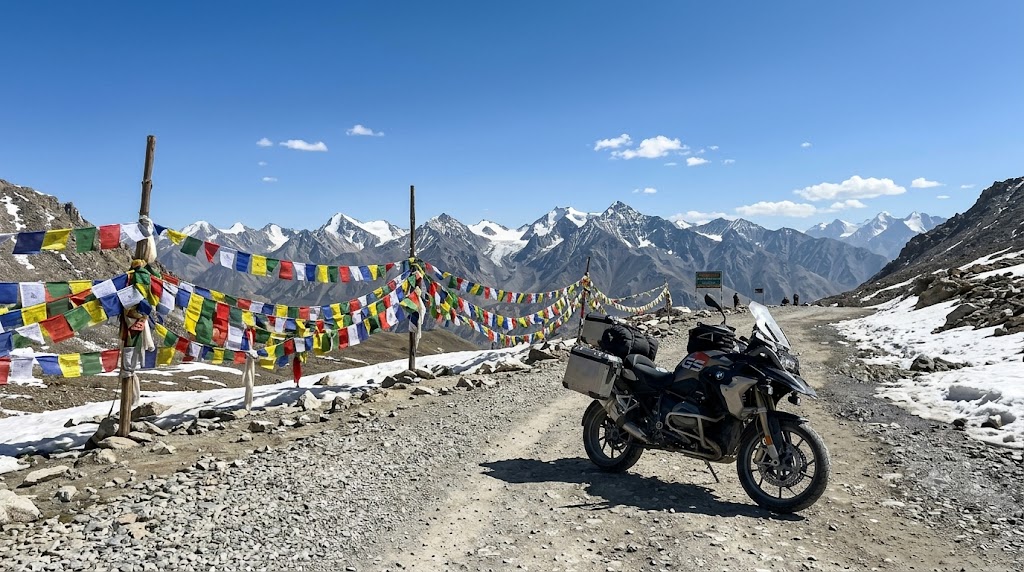
Reached via Khardung La, one of the highest motorable passes in the world, Nubra Valley’s sand dunes and double-humped Bactrian camels feel genuinely out of place against the Himalayan backdrop, which is exactly the appeal. Requires the Inner Line Permit.
Pangong Tso, 1 to 2 Days
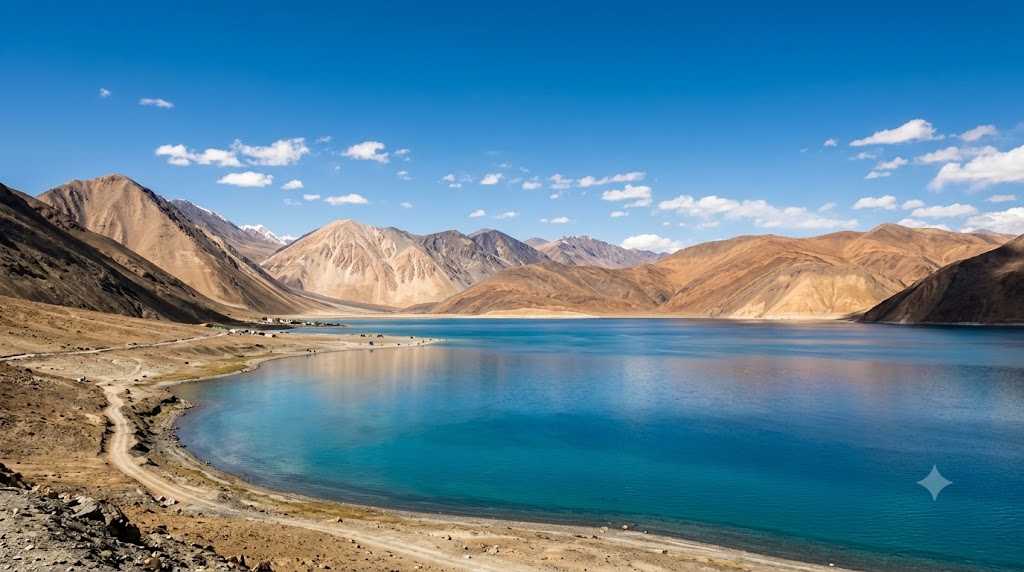
The turquoise lake that anchors most people’s mental image of Ladakh, and it genuinely lives up to the photos, particularly at sunrise before the day-trip crowds arrive from Leh. An overnight stay at the lake, rather than a rushed day trip, is worth the extra permit planning it takes. Requires the Inner Line Permit.
Tso Moriri, Optional 1 to 2 Days
Quieter and less visited than Pangong Tso, a genuine add-on for travellers with extra days who want a similar lake landscape without the crowds. Requires the Inner Line Permit.
A Sample 8-Day Itinerary
- Day 1: Arrive Leh (by air), rest completely, short walk in the evening only
- Day 2: Continued acclimatisation, gentle Leh town sightseeing, Shanti Stupa
- Day 3: Leh Palace, Thiksey and Hemis monasteries
- Day 4: Drive to Nubra Valley via Khardung La, overnight in Nubra
- Day 5: Full Nubra day, sand dunes, camel ride, Diskit Monastery
- Day 6: Drive to Pangong Tso, overnight at the lake
- Day 7: Sunrise at Pangong Tso, drive back to Leh
- Day 8: Departure
This pacing respects the acclimatisation window while still covering the three stops most first-time visitors come for. Add two to three days for Tso Moriri or a Manali road-trip leg if your schedule allows.
Best Time to Visit
| Window | Conditions |
|---|---|
| June to September | The main season, passes open, weather favourable, the only realistic window for the full Manali-Leh road route |
| June to July | Snow walls still visible on high passes, a specific draw for photographers |
| September | Clear skies, thinner crowds, generally considered the best balance of weather and quiet |
| October to May | Roads largely closed, Leh accessible by air only, a genuinely different, much colder trip suited to a specific kind of traveller rather than a first visit |
What to Eat
Ladakhi food reflects its Tibetan Buddhist heritage and high-altitude climate, hearty, warming, and genuinely distinct from mainland Indian cuisine.
- Thukpa, a noodle soup that is as much a practical response to the cold as it is a meal, found everywhere from roadside stalls to hotel restaurants
- Momos, Tibetan-style dumplings, steamed or fried, a staple across Leh
- Skyu, a traditional pasta-like dish cooked with root vegetables, a genuine local speciality worth seeking out over a generic hotel menu
- Butter tea (gur gur cha), salty rather than sweet, an acquired taste for most first-time visitors but a real part of the local hospitality tradition
- Apricots, Ladakh’s own crop, sold fresh in season and dried year-round, a genuinely good local souvenir
Vegetarian travellers are reasonably well catered for in Leh town specifically, though options thin out on the road between Nubra and Pangong Tso, worth carrying snacks for the longer driving legs.
Ladakh vs Spiti Valley
Since both are high-altitude Himalayan road trips often compared against each other, here is the honest distinction, and our Spiti Valley guide covers the other side of this comparison in more depth.
| Factor | Ladakh | Spiti Valley |
|---|---|---|
| Scale | Larger, more infrastructure, more established tourist circuit | Smaller, more remote, fewer facilities, a rawer experience |
| Permits | Environment fee for general sightseeing, ILP for Pangong/Nubra/Tso Moriri/Hanle | Generally no permit needed for Indian tourists on the standard circuit |
| Signature sight | Pangong Tso’s colour-shifting turquoise water | Key Monastery and the stark, moon-like valley landscape |
| Best fit | First-time high-altitude road trippers wanting a complete, well-supported circuit | Travellers who have already done Ladakh and want something quieter and less developed |
Packing Notes
- Carry cash, ATMs are limited outside Leh town and card acceptance is unreliable once you are on the Nubra-Pangong circuit.
- Layer heavily regardless of season, daytime sun at altitude is intense but temperatures drop sharply after dark, even in peak summer.
- Carry printed permit copies, not just digital ones, since mobile signal is genuinely patchy at Pangong Tso and Nubra Valley checkpoints.
- Basic altitude-sickness medication, discussed with your doctor beforehand, is worth carrying even if you do not expect to need it.
Ladakh for Groups and Bachelor Trips
Beyond the adventure-traveller crowd, Ladakh has become a genuinely popular pick for bachelor and bachelorette groups specifically, the combination of a proper road trip, dramatic scenery, and a shared physical challenge suits a friend group looking for something more memorable than a standard beach weekend. Vehicle capacity and permit paperwork both scale with group size, so booking as a coordinated group through one desk avoids the common problem of a group splitting across vehicles or permits not lining up for a shared itinerary.
Booking Timing
The June-to-September window is Ladakh’s only realistic season for the full circuit including the Manali road route, and vehicle and hotel availability in Nubra and around Pangong Tso genuinely tightens as the season progresses, particularly around the July-August peak. Booking two to three months ahead is worth doing for this window specifically, both to secure vehicle availability for the restricted-zone circuit and to give the Inner Line Permit paperwork enough lead time.
Cost Shape, Without Fixed Numbers
We are not publishing fixed price tags, since cost depends heavily on whether you fly or drive, vehicle category for the Nubra-Pangong circuit (a standard car versus an SUV built for the terrain), and season, but the relative shape is worth knowing. The Inner Line Permit fees themselves are modest and not where your budget goes, the real cost drivers are the vehicle for the restricted-zone circuit and flight timing if you fly both ways during peak season. Booking your flights and permits together through one desk avoids the common mistake of confirming flights before confirming permit and vehicle availability for your exact dates, worth checking our India tour packages from Chandigarh for how we typically structure this. Reach out and we will build a real, itemised quote for your dates within 24 hours, no obligation.
Who This Trip Suits
- Adventure and road-trip enthusiasts, particularly for the Manali-Leh route specifically
- Photography-focused travellers, given Pangong Tso’s colour-shifting water and the stark mountain landscapes throughout
- Bachelor and bachelorette groups, a genuinely popular pick for this occasion, as covered in our bachelor trip destinations guide
- Travellers in good general health, given the genuine altitude considerations, this is not the easiest trip for very young children or those with cardiac or respiratory conditions without medical clearance
Frequently Asked Questions
Do Indian tourists still need a permit for Ladakh in 2026?
For general Leh sightseeing, no separate Inner Line Permit document is needed, just an online Ladakh environment fee through the LAHDC Leh portal. A genuine Inner Line Permit is still required for Pangong Tso, Nubra Valley, Tso Moriri, and Hanle specifically.
Is there a direct flight from Chandigarh to Leh?
Connectivity runs through Delhi in most cases, with a short Chandigarh-Delhi hop followed by a flight to Leh on carriers including IndiGo, Air India, Vistara, and SpiceJet.
How many days does a Ladakh trip need?
Seven to eight days covers Leh, Nubra Valley, and Pangong Tso comfortably while respecting the acclimatisation schedule. Ten or more days allows a one-way Manali road trip plus the full circuit, or an added Tso Moriri extension.
Is altitude sickness a serious risk in Ladakh?
Yes, genuinely. Leh sits at roughly 3,500 metres and several key stops sit higher still. Building in 24 to 48 hours of rest on arrival before any strenuous activity is the single most important thing a first-time visitor can do.
Should I fly to Leh or do the Manali road trip?
If you have ten or more days, doing the road trip one way and flying back gets the acclimatisation benefit of a gradual altitude gain without spending the whole trip on the highway. With a week or less, flying both ways and respecting the rest schedule properly is the more realistic choice.
Can families with young children do a Ladakh trip?
It is possible but needs real care given the altitude, a paediatrician consultation beforehand is worth it, and building in extra acclimatisation days matters more for children than adults.
Where does the Inner Line Permit process actually happen?
Applications are processed online in advance for Indian citizens, and travel agents commonly handle the paperwork as part of a package, though it can also be done independently through the relevant district administration portal.
Is mobile network coverage reliable in Ladakh?
Reasonably good in Leh town itself, but genuinely patchy to non-existent on the Nubra Valley and Pangong Tso circuit, worth informing family back home in advance and carrying offline maps and printed documents rather than relying on connectivity.
What is the biggest planning mistake people make with Ladakh?
Treating it like a normal domestic trip and building an itinerary around covering the most sights in the fewest days, without accounting for acclimatisation. This is the single most common reason a well-intentioned itinerary ends up cut short.
Plan It Around Acclimatisation, Not Just Sightseeing
A generic Ladakh itinerary built purely around covering the most stops in the fewest days is exactly how altitude sickness cuts a trip short. Explore more India tour packages from Chandigarh, compare it against our Spiti Valley guide if you are weighing high-altitude Himalayan trips generally, or call us directly at +91 99143 10333 for an itinerary with the permits and the rest days both planned in from the start, whether that is a focused eight-day flight-in trip or the fuller road-and-fly combination with Manali built in. Flywings team since 2005.
Sukhjinder Kaur is a premium travel content writer specialising in the tourism industry. She writes Flywings' destination guides, fare-saving playbooks and visa explainers — every piece researched with the agency's ticketing and visa desks before it is published.
View full profile